
 0 Comments
Table of Contents
Ayala-led ACEN Corp. is planning a P15.8-billion battery energy storage system (BESS) to support its largest solar facility in the Philippines, taking a significant step in reinforcing the country’s energy resilience as global oil supply risks continue to mount amid tensions in the Middle East.
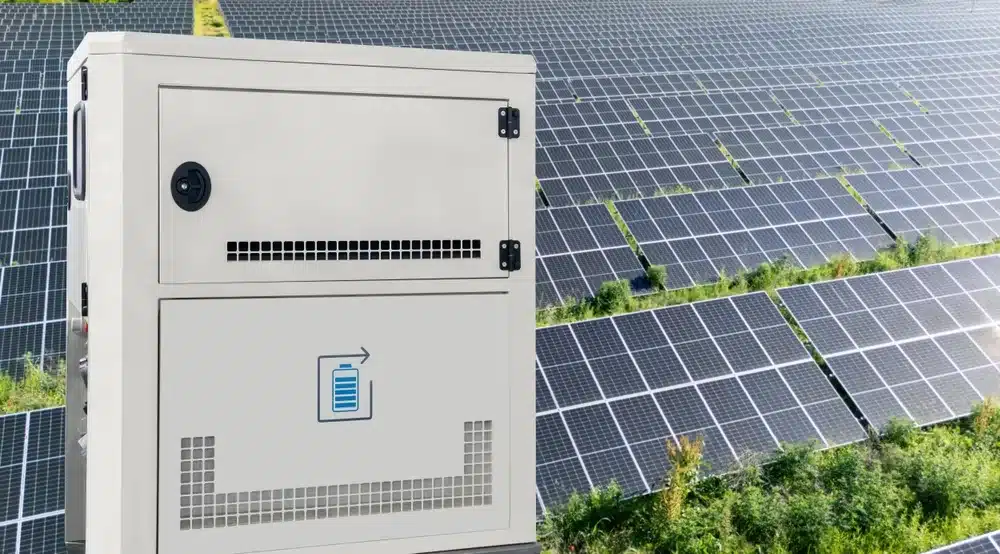
The proposed 2,000-megawatt-hour storage facility will be integrated into the company’s San Marcelino solar power project in Zambales, enabling the renewable plant to deliver more stable electricity to the grid and store excess power generated during the day.
Strengthening Solar Power Reliability
ACEN subsidiary SanMar Solar Inc. said the battery facility will be installed within the existing site of the solar farm, which has a capacity of about 585 megawatts. The project proponent is currently seeking amendments to the environmental compliance certificate for the solar facility to allow the construction and operation of the storage system.
Battery energy storage systems store electricity generated from renewable sources and release it when the power supply from the plant drops or when demand peaks. The technology is increasingly viewed as critical for stabilizing grids with rising shares of solar and wind power.
“The BESS is intended to support and optimize the operation of the existing solar facility by enhancing energy storage and grid support capabilities,” the company said in its filing with the Department of Environment and Natural Resources.
Once operational, the facility can also provide ancillary services to the grid operator, helping maintain transmission reliability and system stability.
Construction Timeline
The storage system is expected to be developed within the current footprint of the solar farm, meaning no additional land will be required beyond the site already covered by the approved environmental clearance.
ACEN said construction of the BESS could begin as early as the third quarter of 2026 once regulatory approvals are secured. The company targets project completion by the end of 2027, with commercial operations scheduled for the first quarter of 2028.
Currently, around 385 MW of the solar farm is already operational, while another 200 MW is under construction and expected to begin commercial operations by the third quarter of 2027.
The San Marcelino project is among ACEN’s largest renewable assets in the Philippines and forms part of the company’s rapidly expanding clean energy portfolio.
Expanding Renewable Capacity
ACEN has been ramping up investments in battery storage to complement its growing fleet of solar and wind facilities across Asia-Pacific. Company president and chief executive Eric Francia earlier said energy storage would play a key role in enabling higher penetration of renewable energy.
For 2026, ACEN plans to allocate more than P80 billion for capital expenditures, significantly higher than the previous year’s P55 billion. About 75 percent of the investment is earmarked for Philippine projects, including new solar and wind developments.
The company currently has about 7 gigawatts of attributable renewable capacity across projects in operation, under construction, and with signed agreements in markets such as the Philippines, Australia, Vietnam, India, and Lao PDR.
As the Philippines works to expand its renewable energy capacity and reduce reliance on imported fossil fuels, large-scale battery storage projects such as the planned San Marcelino facility are key to ensuring stable and secure electricity supply.
Source:
https://business.inquirer.net/577713/acen-eyes-p15-8-b-energy-storage-system-in-zambales-solar-park
https://www.philstar.com/business/2026/03/06/2512277/acen-integrating-battery-storage-solar-farm