
 0 Comments
Table of Contents
A proposal mandating solar energy systems in all government buildings is gaining renewed attention as rising fuel costs force operational adjustments, including the adoption of four-day workweeks in some public offices.
Abra Lone District Rep. JB Bernos said the situation highlights the country’s continued vulnerability to volatile oil prices and underscores the need to accelerate the transition to renewable energy.
“Hindi po ito ang huling pagkakataon na magmamahal nang todo ang petrolyo dahil limitado ang supply, kaya dapat tayo na mismo ang gumawa ng paraan para mabawasan ang negatibong epekto nito (This will not be the last time that oil prices will become expensive because supply is limited, that’s why we must find ways to minimize its negative effects),” Bernos said.
Mandatory Solar
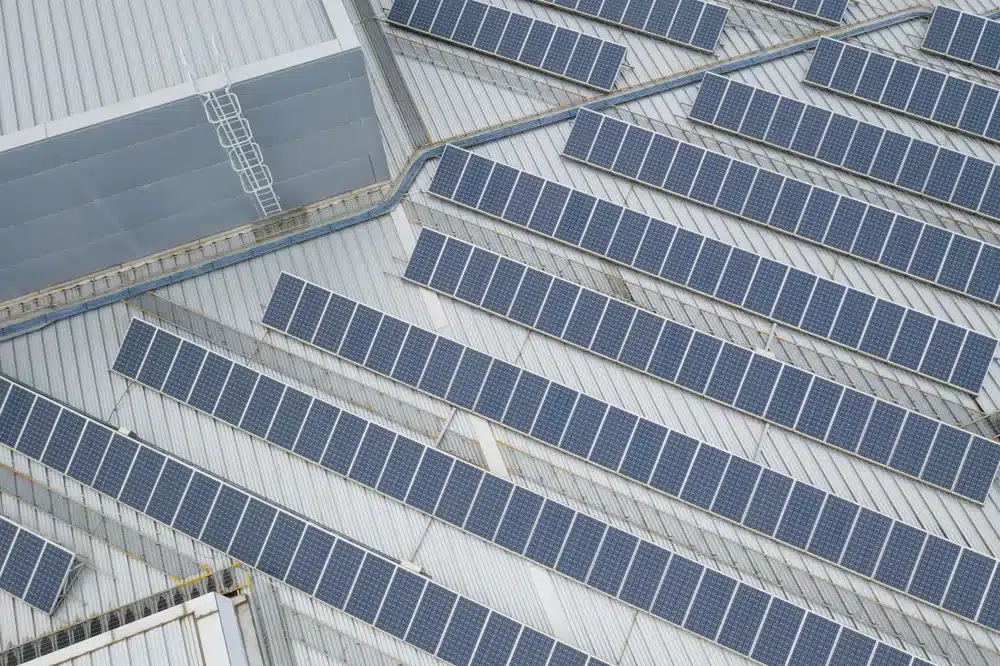
At the center of the proposal is House Bill No. 3126, or the On-Grid Solar Energy Systems Act, which seeks to require the installation of solar energy systems in all national and local government-owned buildings.
The measure aims to reduce electricity costs while lowering dependence on oil, even outside periods of geopolitical disruption or supply shocks.
Under the bill, government agencies would be required to source at least 20 percent of their average monthly energy consumption from on-grid solar systems within the first year of installation. This share would progressively increase to 40 percent in the second year, 60 percent in the third, 80 percent in the fourth, and reach full coverage within five years.
Both national government offices and local government units would be covered by the mandate, creating a nationwide rollout of solar infrastructure across public facilities.
Long-Term Savings
Bernos emphasized that solar energy presents a practical and cost-effective solution for the government, citing the declining cost of solar panel technology and its long operational lifespan.
“Considering that solar panel technology has become much cheaper to the point that it is even viable for home use, not to mention a typical lifespan of 25 to 30 years, there is hardly any reason why the government shouldn’t shift to a resource that we have in abundance,” he said.
The lawmaker noted that widespread adoption of solar systems in government buildings could generate significant savings on electricity expenditures over time, while also reducing the country’s reliance on imported fossil fuels.
Structural Reform
The proposal positions renewable energy adoption not only as a cost-saving measure but also as a structural response to recurring energy price shocks. By embedding solar generation within government operations, the measure aims to insulate public services from fuel-driven disruptions such as shortened workweeks.
Bernos argued that with abundant solar resources available locally, transitioning public infrastructure to renewable energy is both feasible and necessary.
Source:
https://www.pna.gov.ph/articles/1272325
https://tnt.abante.com.ph/2026/04/06/solar-energy-sa-lahat-ng-mga-government-building-itinulak/news/