
 0 Comments
Table of Contents
Amid discussions on removing system loss charges from electricity bills, the Energy Regulatory Commission (ERC) announced that scrapping at least nontechnical losses is feasible.
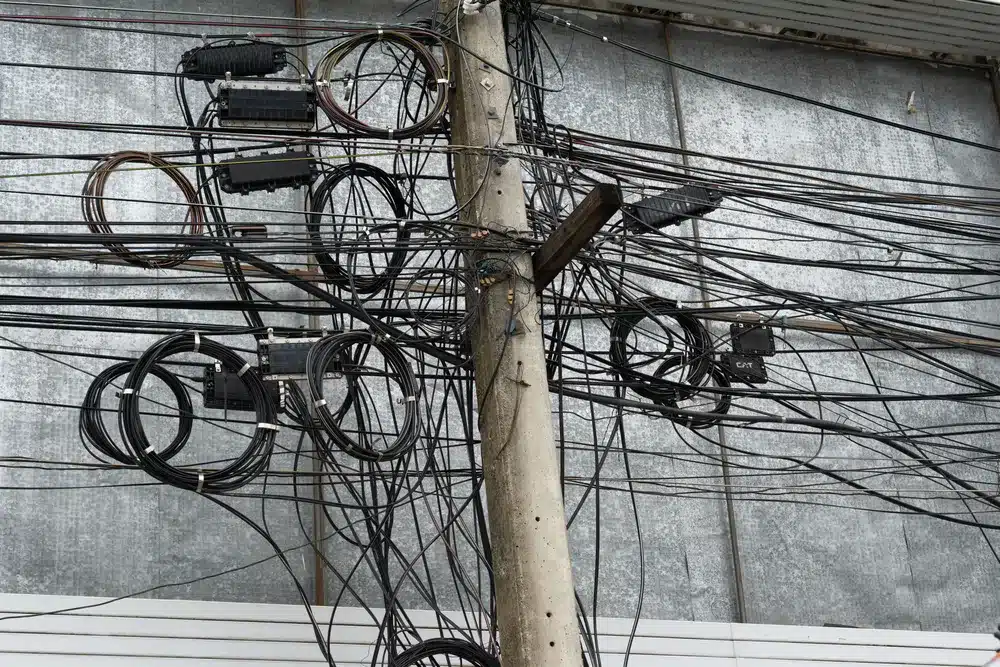
Nontechnical system losses stem from factors such as human error, meter tampering, and electricity theft. Technical losses, on the other hand, are inherent in the transmission and distribution of electricity due to resistance and other physical limitations of the power system.
ERC Chair Francis Saturnino Juan noted that distribution utilities (DUs) could adjust tariffs to fund anti-pilferage measures, while keeping the remaining nontechnical losses low enough to avoid passing high costs on to consumers or threatening their viability.
However, Juan made it clear that the government should consider allowing tariff support for DUs to strengthen anti-theft measures if nontechnical system losses are no longer recoverable.
In his fifth State of the Nation Address in July, President Marcos called for an end to passing system loss charges, including the related value-added tax (VAT), on to consumers.
The announcement met resistance, specifically from the Philippine Rural Electric Cooperatives Association Inc. (PHILRECA), which represents 121 electric cooperatives (ECs) nationwide. The group maintained that it could support eliminating system loss charges only if the government shouldered the costs through a dedicated subsidy.
But Palace Press Officer Claire Castro said the government is not considering subsidies for utilities, stressing that the directive was not intended to burden utility companies, but to push them to “study how they can avoid losses,” particularly those caused by theft and pilferage that are ultimately paid for by consumers.
Meanwhile, Department of Energy (DOE) Secretary Sharon Garin explained that removing system loss charges could lower electricity rates by 5% to 15%, adding that while the target is within a year, the measure could be implemented sooner.
(Also read: CREC Launches First Embedded Solar Project With Battery Storage In Pampanga)
The Wide Gap in System Loss Standards
The ERC imposes system loss recovery caps to limit how much of a utility’s inefficiency can be charged to consumers. Private DUs such as Meralco generally face a cap of about 5.5% to 6.5%, while ECs are allowed higher limits ranging from 8.25% to 12%.
When actual system losses exceed the allowable threshold, the utility must absorb the excess rather than recover it from customers. Losses kept within the prescribed limits, however, may be passed on to consumers through their electricity bills.
Former ERC Chairperson Monalisa Dimalanta and Asian Institute of Management (AIM) professor Ricardo Barcelona wrote that greater efficiency can translate into higher profits. Meralco, for instance, has reported system losses of about 5.68% of throughput, suggesting that utilities operating near efficient benchmarks face far less financial exposure than those with losses well above the allowable levels.
The authors pointed out that ECs pose a tougher reform challenge because performance varies widely, with some operating efficiently while others struggle with elevated losses, governance gaps and weak accountability.
“Where losses reflect theft, poor management, or governance failure, those costs should not be shifted indefinitely to consumers,” they highlighted. “A system cannot permanently reward high losses with full cost recovery and expect efficiency to emerge later.”
Are ECs Being Given Too Much Leeway?
ERC data showed that several ECs continued to post system losses well above allowable limits in 2025. The combined operations of Albay Electric Cooperative (ALECO) and Albay Power and Energy Corp. (APEC) recorded the highest loss at 21.5%, followed by Zamboanga City Electric Cooperative (ZAMCELCO) at 18.1%, Zamboanga del Sur II Electric Cooperative (ZAMSURECO II) at 16.2%, Siasi Electric Cooperative (SIASELCO) at 13.8%, and Camiguin Electric Cooperative Inc. (CAMELCO) at 13.1%.
These losses also translated into substantial costs that utilities had to absorb. ZAMCELCO recorded the largest amount at P543 million, followed by South Cotabato II Electric Cooperative (SOCOTECO II) at P410 million, and ALECO/APEC at P374 million.
But ECs warn that removing the system loss charge could further strain their finances. The National Electrification Administration (NEA) estimates that 89 of the country’s 121 ECs could incur losses if the charge is fully removed from consumers’ bills.
NEA supports removing nontechnical losses from consumer bills, according to Administrator Antonio Almeda. He added that the NEA began analytics-driven programs this year to reduce, and eventually eliminate, nontechnical losses in cooperatives exceeding the ERC’s system loss cap.
“If they (ECs) will be made to answer for technical systems losses, they will eventually not be able to pay their suppliers, the gencos and the WESM,” stated Almeda. “The continuing partial payments will eventually lead to indebtedness without a source of repayment.”
To help ECs cope, NEA is seeking a P3.5-billion to P10-billion Loan Equity Fund, which would finance the replacement of aging mechanical meters with smart, tamper-resistant units and upgrades to overloaded distribution lines.
However, this measure also raises questions about accountability among NEA and some ECs. In December 2024, the Commission on Audit (COA) flagged NEA for weak enforcement of rural electrification rules, with P992 million in subsidies still unliquidated as of end-2023. While NEA oversees the country’s rural power program, ECs carry out much of its implementation.
Additionally, a study by the Institute for Contemporary Economics (ICE) found that seven ECs in Panay and Guimaras spent just P2.38 billion of their P10.52-billion programmed capital budget for 2022 to 2024, with much of the funding going to routine maintenance rather than upgrades. The shortfall has limited investments in substations, distribution lines and protection systems needed to strengthen grid reliability and meet rising demand.
Government assistance to ECs has also come in the form of substantial public funding. NEA data show that 90 cooperatives received P3.028 billion in subsidies in 2024, while the DBM released another P3.627 billion in 2025 for projects implemented through the agency and its EC partners. The program received a further P9.9-billion allocation in the 2026 national budget.
With the reform putting ECs under greater pressure, the government is taking a more active role in tackling the problem at its source. DOE Undersecretary Riolita Inocencio said stronger enforcement against electricity theft may require amendments to the Anti-Pilferage Law, while the agency is coordinating with law enforcement and local governments to establish dedicated anti-pilferage task forces.
However, Philippine Star columnist Boo Chanco noted that private DUs have already been investing in measures to curb system losses, even before the issue became a focus of the SONA. He cited smart-grid technology that matches electricity supplied to a neighborhood with real-time household consumption, allowing DUs to quickly detect discrepancies and locate illegal connections. “Meralco and MORE in Iloilo City are using these facilities,” he wrote.
Adding to concerns over efficiency among some ECs, Sen. Raffy Tulfo warned that political influence could affect the collection of unpaid electricity bills, potentially leaving ordinary consumers to shoulder the cost. At a Senate Committee on Energy hearing, he stressed that some ECs are owned or controlled by politicians.
“That’s just real talk,” he declared.
(Also read: ACEN Eyes Renewable Energy Role In Powering Planned Pax Silica AI Hub)
A Test of Accountability
The push to remove system loss charges from consumers’ bills should force a deeper reckoning over how poorly performing ECs are governed, financed and held accountable. As Garin warned, “They (ECs) might not survive unless we execute the proper reforms first…because an even bigger problem would be having no electricity at all in those provinces.”
That is precisely the heart of the debate. Consumers cannot be expected to indefinitely subsidize inefficiency, theft and poor management. But neither can failing ECs simply be allowed to collapse when entire communities depend on them for power. In effect, the public is held hostage by badly managed utilities: consumers continue paying for their shortcomings because the consequences of failure are too severe to ignore.
For Dimalanta and Barcelona, the answer is meaningful intervention before an EC reaches that point.
“That is why cooperative reform should be viewed less as an ownership debate and more as a performance-accountability mechanism: the institutional form must make losses visible, assign responsibility, and permit correction before consumers are asked to pay,” they stressed. “A credible reform pathway would, on one hand, respect and protect the right to access electricity and, on the other hand, convert cooperative membership into transferable shares, transform cooperatives into corporations governed under the rules of the Securities and Exchange Commission, elect qualified boards under existing corporate governance standards, and hold those boards and officers accountable for turnaround, restructuring, merger, or sale decisions.”
The government, however, cannot escape its own responsibility in this equation. If consumers are to be protected from both excessive charges and the threat of losing electricity, regulators and policymakers must enforce standards before poor performance becomes a crisis. That means identifying failing ECs early, demanding corrective action and intervening decisively through private partnerships when management cannot turn them around. Government assistance should help viable ECs modernize and improve, not become a permanent shield for inefficiency.
Ultimately, real reform requires a power sector where efficiency is rewarded, avoidable losses are not socialized, and neither consumers nor entire communities are held hostage by the consequences of poor management.
Sources:
https://newsinfo.inquirer.net/2283975/erc-on-scrapping-non-technical-system-loss
https://tribune.net.ph/2026/08/13/albay-co-ops-top-system-loss-listhttps://manilastandard.net/business/314777645/89-co-ops-face-losses-in-absence-of-system-loss-charges.html
https://www.dailyguardian.com.ph/panay-power-grid-at-risk-due-to-underinvestment-by-electric-coopsys
https://nea.gov.ph/wp-content/uploads/2025/09/NEA-2024-Annual-Report_compressed-2.pdf
https://www.philstar.com/business/2026/08/03/2546504/system-loss-charge