
 0 Comments
Table of Contents
During the hot and dry season, the Philippines was reminded of a basic rule of electricity markets: when power supply gets tight, prices can rise sharply.
In May, heat-driven demand and widespread plant outages triggered consecutive red alerts in Luzon and Visayas. On May 12, 31 plants were on forced outage or operating below capacity, while Luzon demand hit a 2026 high of 14,268 megawatts (MW). By May 14, available capacity was already falling short of projected peak demand by 116 MW in Luzon and 128 MW in the Visayas.
The resulting supply squeeze was felt not only through rotating brownouts but also in the wholesale market. The Independent Electricity Market Operator of the Philippines (IEMOP) reported that the average Wholesale Electricity Spot Market (WESM) price jumped to ₱7.79 per kilowatt-hour in May from ₱5.63/kWh in April, as higher summer demand, tighter supply margins, and generating-unit outages pushed prices higher.
The pressure continued in June, with the average WESM price rising 22.7% amid tighter supply and reserve deficiencies. In the Visayas, prices jumped 41.7% as supply fell.
The episode also underscored a longer-running weakness in the country’s power system. The National Grid Corporation (NGCP) stated that 235 of 243 red alerts recorded from 2016 to 2025, or 96.7%, were attributed to generation supply deficiencies. NGCP said the historical record points to the need for more dependable baseload generation and resource-adequacy planning.
That distinction matters. Adding megawatts to the grid does not automatically mean adding power that can be counted on when consumers need it most.
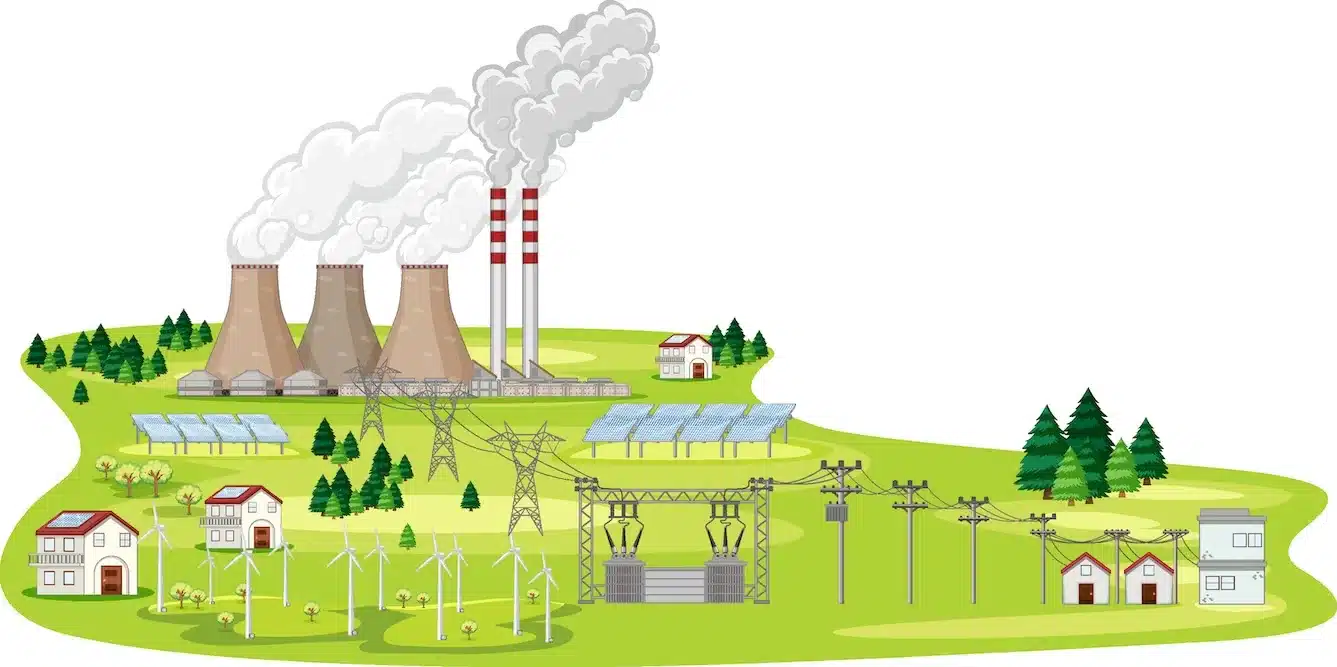
Dependable or baseload generation provides a steady supply that the grid can rely on during periods of high demand or when other generating units are unavailable. Solar and wind, by contrast, are variable by nature: their output depends on sunlight and wind conditions and can fall even when electricity demand remains high.
From 2024 to 2025, solar facilities in the Visayas had average availability and capacity factors of just 18% to 19%, while wind averaged 22% to 23%. Coal plants, meanwhile, recorded much higher and more consistent performance, with 86% to 88% availability and 61% to 64% capacity factors.
(Also read: ACEN Completes Upgrades To Pioneering Ilocos Norte Wind Farm)
More Reliable Supply Can Keep Prices in Check
The May crisis demonstrated how quickly a combination of high demand and unavailable generating units can erase the supply cushion. And when that cushion disappears, electricity becomes more expensive: generators that remain available gain greater influence over the market price, while consumers become more exposed to costly replacement or spot-market power.
When power runs short, prices rise.
Power alerts have become a recurring warning sign for the Philippines’ strained electricity supply. In the Visayas, repeated yellow alerts in September 2025 came with a direct cost: consumers were warned that tighter supply could push up their power bills.
A utility may have contracted power at a predetermined price, but if that contracted generator goes offline, it may need to source replacement electricity from WESM. If the spot market is already tight, that replacement power can be considerably more expensive.
Negros Power Energy Sourcing Manager Christian John Villena said supply shortages drive up WESM prices, underscoring the need for new power plants and long-term capacity planning.
The same concern surfaced in Luzon. In April 2025, Meralco identified a chronic shortage of baseload capacity as a key driver of soaring WESM rates, noting that recent capacity additions had largely come from intermittent solar projects that leave supply gaps after sunset, when demand remains high.
As Meralco and other energy experts have repeatedly stressed, the focus should be on bringing new, greenfield power projects online to close the supply gap rather than blaming existing plants for delays caused by factors beyond their control, including technical issues, regulatory hurdles and force majeure events.
Firm power can cushion consumers from price shocks.
In Mindanao, unexpected power-plant outages in June thinned reserves and triggered yellow alerts. Department of Energy (DOE)-Mindanao’s Darwin Galang explained that when cheaper baseload capacity becomes unavailable, the grid must turn to more expensive diesel plants to meet demand, pushing up WESM prices and, ultimately, consumer generation charges.
When the oil and liquefied natural gas (LNG) crisis erupted earlier this year, the Philippines turned back to coal to help contain rising electricity costs. DOE Secretary Sharon Garin warned that without intervention, power prices could rise by as much as 16% the following month.
The Philippines was not alone. As gas markets remain strained and prices elevated, several countries in Asia and Europe have turned to coal to shore up power supply and contain energy costs. Germany, Italy, Japan, South Korea, Pakistan, Bangladesh, and Thailand have all moved to expand coal generation or reconsider planned coal phaseouts.
Italy, for instance, has pushed back its coal phaseout target from 2025 to 2038. Ember estimates that about three-quarters of the potential global impact of the energy shock could come from switching from gas to coal, particularly in China and the European Union.
“For all intents and purposes, in the face of a continuing volatile global market, coal stands as the most reliable and cost-effective ‘baseload’ fuel capable of shielding Filipino households and industries from a total energy collapse,” asserted Rappler’s Den Somera.
Making intermittent power reliable comes at a cost.
A growing share of intermittent solar and wind does not come without additional system requirements. Because their output can fluctuate with weather and time of day, the grid needs more flexibility, reserves, and ancillary services to balance sudden changes in supply and demand.
BusinessWorld columnist Bienvenido Oplas pointed to his May 2026 electricity bill, where higher NGCP transmission charges included the cost of ancillary services from batteries and oil- and gas-fired peaking plants. He linked the rising costs to the growing share of intermittent renewable energy entering the grid without sufficient storage support.
Additionally, beginning with August billing, households will pay higher renewable energy charges after the Energy Regulatory Commission (ERC) approved a ₱0.1348-per-kWh increase in the 2026 Feed-in Tariff Allowance (FIT-All) rate to ₱0.3359/kWh. A household consuming 500 kWh a month will pay about ₱168 in FIT-All charges alone. The uniform charge funds payments to qualified renewable energy projects, including solar, wind, and small hydropower facilities, which are eligible to receive the incentive for up to 20 years.
None of this means renewable energy should be rejected. It means the full cost of making intermittent generation dependable needs to be part of the conversation about the energy transition.
And that raises another question: what happens to the dependable generation assets the country already has? The Philippines has about 7,000 MW of coal-fired capacity that is 10 years old or younger, according to the DOE in 2025. The country’s coal fleet also accounts for about 62% of power generation, making it a substantial source of existing firm capacity and grid infrastructure.
“Coal maintains its dominance in the Philippines as it provides the lowest price yet delivers the most stable operation in electricity generation, despite the country’s aggressive renewable energy expansion,” stated the Philippine Daily Inquirer.
Abruptly sidelining that capacity could therefore create a double burden: replacing its dependable output while simultaneously spending on storage, flexible generation and transmission to accommodate more variable renewable energy.
“Transition has to be calculated and calibrated,” reminded DOE Undersecretary Rowena Guevara. “We do not want this to impact the economic growth of the country by suddenly turning off our coal-fired power plants.”
(Also read: CREC Launches First Embedded Solar Project With Battery Storage In Pampanga)
Affordability Must Remain at the Heart of the Energy Transition
When electricity costs rise, the impact does not stop at the monthly bill. Higher power costs feed into the price of goods and services, raise business operating expenses, and ultimately make it harder for the economy to remain competitive.
That makes the lessons from the recent power alerts difficult to ignore. The country cannot afford a system where generation capacity grows on paper, but supply remains tight when consumers need electricity most. Nor can it afford to replace dependable capacity before sufficient alternatives are ready to provide the same level of reliability.
Renewables will undoubtedly remain an important part of the Philippines’ energy future. But adding intermittent generation must go hand in hand with the investments needed to make it dependable, including storage, transmission upgrades, flexible generation and adequate reserves.
For a country seeking faster economic growth and better living standards, affordable electricity is not a luxury. It is an economic necessity. The energy transition will succeed not only when the Philippines generates more renewable power, but when it can deliver sufficient electricity to Filipino households and businesses at a price they can afford.
Sources:
https://www.iemop.ph/news/anticipated-higher-spot-rates-amid-high-demand-manifests-in-may-2026
https://icsc.ngo/grid-alerts-high-wesm-prices-signal-need-for-power-system-flexibility/
https://www.iemop.ph/news/tighter-regional-supply-conditions-drive-june-2026-electricity-prices
https://visayandailystar.com/electricity-rates-higher-due-to-yellow-alerts
https://insiderph.com/uploads/files/32/MERALCO%20PRESS%20RELEASE%20ON%20PSAs.pdf
https://www.rappler.com/business/opinion-recalibrate-philippines-energy-program
https://newsinfo.inquirer.net/2198408/marcos-counting-on-coal-imports-for-stable-power
https://opinion.inquirer.net/192970/the-critical-deficit-of-baseload-power-in-visayas