
 0 Comments

Table of Contents
The Philippines has added an estimated 222 billion cubic feet (bcf) of recoverable natural gas reserves to its domestic supply following the first delivery of gas from the Malampaya East-1 and Camago-3 wells, a development expected to help reduce dependence on imported energy and support electricity supply to the Luzon grid.
President Ferdinand Marcos Jr. led the ceremonial activation of the first gas flow at the Malampaya Onshore Gas Plant in Barangay Tabangao Ambulong, Batangas City, alongside Prime Energy Chairman Enrique Razon.
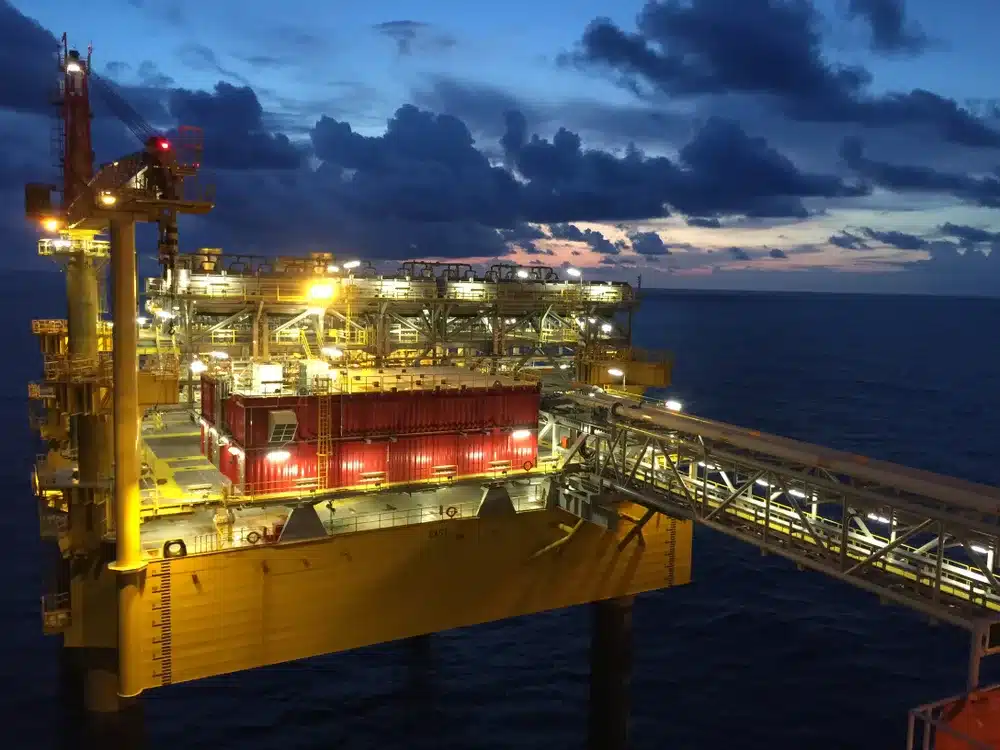
The wells, located offshore Palawan, form part of the Malampaya Phase 4 (MP4) project operated by Prime Energy, a member of the Razon Group. Their integration into the existing Malampaya production system marks a new stage in efforts to sustain the country’s indigenous natural gas supply and extend the productive life of the offshore gas field.
The additional reserves could generate approximately 31.46 billion kilowatt-hours (kWh) of electricity, enough to power an estimated 13.11 million Filipino households for one year, according to Prime Energy.
The development comes as the Philippines faces continued exposure to volatile international energy prices, geopolitical tensions and potential supply disruptions because of its reliance on imported fuel.
Reducing Dependence On Imported Energy
Marcos said the new wells would help strengthen energy security by increasing the availability of locally produced natural gas, which could cushion the country against fluctuations in global fuel prices.
“We cannot fully rely on other countries to provide these resources all of the time. Last year, more than half of our energy supply came from abroad. Thus, our energy sector is very susceptible to geopolitical tensions, supply disruptions, and price fluctuations,” the President said.
He added that maximizing the use of Malampaya gas could contribute to more competitive electricity rates by reducing dependence on imported energy sources whose prices are influenced by conditions in the international market.
“What does this mean to Filipino families? Sariling gas. Mas maaasahang kuryente. Mas matatag na enerhiya para sa ating bansa,” (“Our own gas. More reliable electricity. More stable energy for our country”) Marcos said.
Natural gas from the new wells will pass through the existing Malampaya subsea production system and gas transmission infrastructure to Batangas, where it will supply gas-fired power plants serving the Luzon grid.
The potential cost advantage is significant for the power sector. Malampaya gas costs about ₱4.80 per kWh, almost half the price of imported liquefied natural gas (LNG), according to figures cited in the reports.
Greater availability of domestic gas could therefore help reduce fuel costs for power generation, although the actual impact on electricity rates will also depend on power plant operations, supply contracts and other components of electricity pricing.
The development also comes amid mounting pressure over high power costs and recurring grid alerts in the Visayas and Mindanao. The Department of Energy (DOE) has been urged to penalize power companies found responsible for violations as consumers continue to contend with rising energy expenses.
Nearly $1 Billion Investment
The MP4 project involved an investment of nearly $1 billion and covered the drilling of two deepwater wells and the installation of subsea infrastructure connecting them to the existing Malampaya production platform.
The Malampaya East-1 and Camago-3 wells were successfully drilled and tested in the first quarter of 2026 before being connected to the existing subsea production system in June.
Prime Energy said the project was completed in 27 months from the final investment decision, approximately five months ahead of its original schedule and the industry benchmark.
“This achievement reflects the strong coordination across the project, particularly given the complexity of deep water development, which involved multiple contractors and suppliers and required the mobilization of specialized equipment, manufactured components and technical experts from around the world,” the company said.
The project also marked the Philippines’ first offshore drilling campaign in more than a decade, drawing on an international supply chain spanning 17 countries. These included Germany, the United Kingdom, Norway, the Netherlands, the United States, Japan, South Korea, Australia, Singapore, Malaysia and the Philippines.
The supply network supported the fabrication, refurbishment and delivery of critical equipment, including subsea systems, umbilicals, valves, cables, generators, pipelines and wellhead components. Philippine-based fabrication and manufacturing capabilities were also tapped for the project.
Expanding Domestic Energy Exploration
Marcos said the country’s growing economy and industrialization would drive higher energy demand, making indigenous resource development increasingly important.
“As our economy grows, so does our demand for energy. Industrialization and energy grow hand in hand. One cannot exist without the other,” he said.
The administration has awarded 14 new petroleum service contracts covering the exploration of oil, natural gas and native hydrogen. The DOE has also granted special allowances to service contractors undertaking exploration in new areas and gas development in remote locations.
The government is implementing the Philippine Gradiometry and Seismic Survey Project to identify potential areas for future exploration.
Another policy initiative is the Philippine Natural Gas Industry Development Act, which prioritizes the procurement and use of indigenous natural gas over imported supplies by gas-fired power plants.
Source:
https://newsinfo.inquirer.net/2336878/malampaya-milestone-gas-flow
https://www.philstar.com/business/2026/11/05/2568071/malampaya-phase-4-achieves-first-gas-delivery
https://tribune.net.ph/2026/11/05/malampaya-phase-4-delivers-first-gas-from-new-wells