
 0 Comments
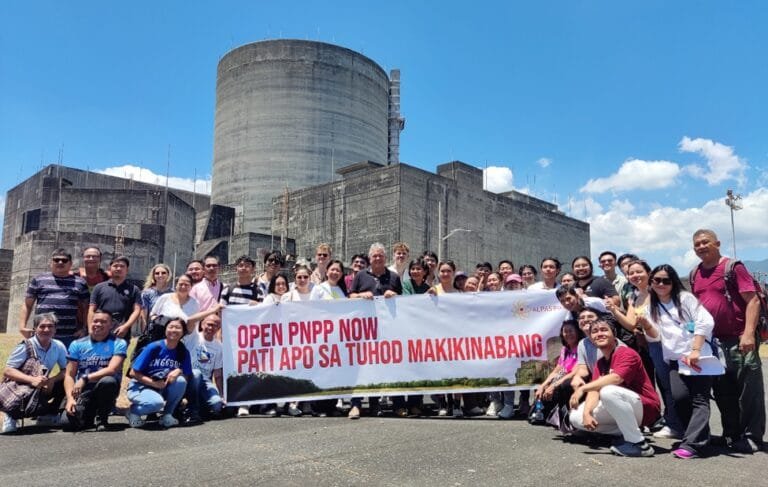
Alpas Pinas, a non-profit organization advocating for nuclear energy as a clean energy source, has recently called for the activation of the Philippine Nuclear Power Plant (PNPP) to address the country’s energy crisis. With the Philippines facing low power reserves, the organization sees the activation of the PNPP as a strategic solution to bolster the country’s power reserves and ensure a stable and reliable power supply.
Gayle Certeza, convenor of Alpas Pinas, stated, “We believe that adding nuclear energy into our country’s energy mix has the potential to help address our power challenges. Nuclear is the cleanest, cheapest, and most efficient means of producing electricity. It can provide a long-term solution to increasing electricity rates, allowing Filipino families to save more. It will also help ensure more energy abundant, environmentally protected, and a bright future for every Filipino.”
The PNPP, built in the 1970s in response to the 1973 oil crisis, remains a promising asset with an electrical capacity of 620 MW, which could significantly contribute to increasing the country’s power reserves. Despite never being commissioned due to various considerations, a 2008 report by the International Atomic Energy Agency (IAEA) affirmed its feasibility for economic operation for 30 years.
Congressman Mark O. Cojuangco, a recipient of the American Nuclear Society (ANS) Distinguished Public Service Award and an advocate for nuclear energy, highlighted the structural quality of PNPP, stating, “When revived, we believe it can outlast decades of operation while helping Filipinos enjoy cheaper, cleaner, and more reliable energy source.”
While organizations are exploring new power facilities driven by liquefied natural gas (LNG) to reduce electricity costs, it’s important to consider the potential drawbacks. The Institute for Energy Economics and Financial Analysis (IEEFA) warns that LNG can significantly increase energy prices. Moreover, LNG’s environmental impact is a concern. It is composed mainly of methane, a greenhouse gas significantly more potent than carbon dioxide, trapping 80 times more heat short-term and 30 times more in the long run.
In conclusion, the activation of the PNPP could be a strategic solution to the Philippines’ looming energy crisis. It not only promises a stable and reliable power supply but also paves the way for a more sustainable and environmentally friendly future.