
 0 Comments
Table of Contents
As the US races to expand renewable energy and modernize its electrical grid, large‑scale battery energy storage systems (BESS) have emerged as a crucial technology. These systems store excess power from solar and wind farms, smoothing out the variability of renewable generation and helping keep lights on when the sun doesn’t shine or the wind doesn’t blow.
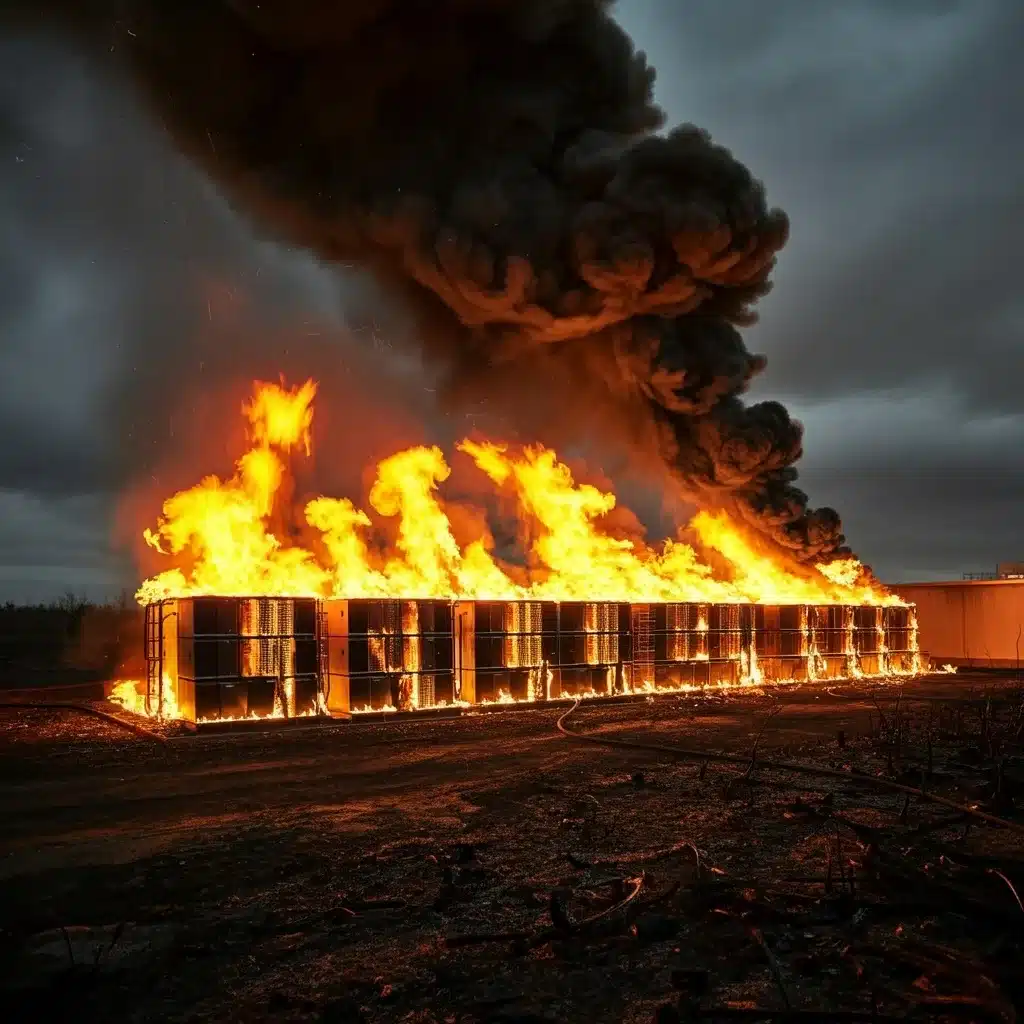
However, a spate of high‑profile fires at BESS installations has thrust the safety and siting of these installations into the spotlight. The incidents are rare relative to deployment but raise critical questions about hazard preparedness, community impact, and how best to balance energy needs with public safety.
Why battery storage matters — and why fires are so concerning
BESS plays an increasingly significant role in the grid. They help stabilize fluctuating power from renewables and provide backup electricity during outages. For many utilities and state energy plans, large‑scale batteries are essential components of future clean energy strategies.
Yet when fires occur in these systems, they pose distinct challenges. Unlike traditional fires in buildings or vehicles, fires involving lithium‑ion batteries can be challenging to extinguish and may reignite long after they appear under control. These fires can release toxic gases and require specialized incident responses. The US Environmental Protection Agency (EPA) has noted that such fires can present risks not only to first responders but also to surrounding communities, and that cleanup and disposal of affected batteries must follow careful protocols.
Because of these complexities, communities near proposed BESS sites have grown increasingly vocal in their calls for stricter safety measures, better oversight, and careful planning of where and how these systems are built.
(Also read: Ifugao Still Struggling With Power Outages Months After Typhoon Uwan)
Warwick, New York: A town twice hit by battery fires
In December 2025, a lithium‑ion battery storage facility in Warwick, New York, operated by Convergent Energy & Power, caught fire, drawing new attention to safety concerns about BESS installations. The blaze, which erupted around 10:30 p.m. on December 19, continued to emit heat and small pockets of burning material for days, prompting monitoring by hazardous materials teams and ongoing public worry about air quality and safety — even though no significant toxic levels were ultimately detected.
A company representative said investigators were still in the early stages of determining the cause of the blaze. Preliminary findings suggested that water may have entered the storage system, a serious concern because lithium-ion batteries can ignite when exposed to moisture.
For residents, the latest fire felt especially alarming because it was not the first in the state.
In 2023, New York saw a troubling run of battery storage fires. The first incident occurred on May 31, when a battery installed by NextEra Energy Resources at a substation in East Hampton caught fire. A company spokesperson later told local media that the site’s water-based suppression system functioned as intended and that no further emergency response was needed.
Less than a month later, on June 26, alarms were triggered at two battery units at the same complex where the fire occurred last December.
The most severe blaze came on July 27 at a Convergent battery system connected to a solar farm in Chaumont, near Three Mile Bay. Firefighters battled the fire for four days before it was finally brought under control.
The cluster of fires placed Governor Kathy Hochul in a difficult position. Her administration has been pursuing an aggressive plan to boost New York’s battery storage capacity from roughly 300 megawatts (MW) to 6,000 MW by 2030 to support the rapid expansion of wind and solar power.
In response, Hochul announced the formation of an interagency battery safety working group and ordered the New York State Energy Research and Development Authority (NYSERDA) to conduct inspections of operating battery projects statewide. Yet those measures failed to prevent another fire.
Moss Landing, California: A major battery storage facility blaze
While the Warwick incident attracted local attention, the Moss Landing Energy Storage Facility blaze in Monterey County, California, in January 2025, became a national and international talking point due to its scale and visibility. The facility, which is one of the world’s largest battery power plants, holding roughly 100,000 lithium‑ion battery cells at the time of the fire, experienced a major blaze that quickly overwhelmed parts of the installation. The fire damaged roughly 55% of the facility’s batteries.
Officials closed Highway 1, a key route connecting Santa Cruz and the San Francisco Bay Area, and ordered around 1,200 residents to evacuate.
Monterey County Supervisor Glenn Church noted that this marked the fourth fire since 2020 at the property, which includes the Moss Landing site and an adjacent 182.5-MW battery energy storage facility operated by Pacific Gas & Electric. Church described the blaze as a “worst-case scenario,” drawing a comparison to the partial meltdown at the Three Mile Island nuclear plant in 1979.
California Assembly member Dawn Addis called for “transparency and accountability” in the wake of the incident and said she was “exploring all options for preventing future battery energy storage fires from ever occurring again on the Central Coast.”
In the aftermath, scientists at San José State University’s Moss Landing Marine Laboratories (MLML) found unusually high levels of heavy-metal nanoparticles in marsh soils at the Elkhorn Slough Reserve. Field surveys within about two miles of the Moss Landing power plant revealed that surface concentrations of nickel, manganese, and cobalt had surged by hundreds to thousands of times compared with baseline levels. As they disperse, these heavy metals may enter the food web, posing risks to nearby wetlands and wildlife.
“These findings and the research that follows are crucial not only to the impacted community but to the national and international community because of the need to store more power and thus build more and larger battery storage facilities,” highlighted MLML Department Chair Ivano Aiello. “This is a new and fast-growing technology, and we must understand the ecological impacts in the event that accidents like this happen again.”
In July 2025, the American Clean Power Association released a model ordinance to help states and municipalities regulate battery energy storage, covering safety, permitting, siting, environmental compliance, and decommissioning. In October 2023, California Gov. Gavin Newsom signed legislation requiring all state battery facilities to create coordinated emergency response plans.
(Also read: Lighting Hope Where the Grid Cannot Reach)
How battery fires spread and why they’re difficult to extinguish
To understand why these fires are so persistent and difficult to manage, it helps to consider how lithium‑ion batteries behave when they fail. When a cell overheats and enters thermal runaway, it triggers a rapid, self‑sustaining increase in temperature and chemical reactions that generate additional heat and flammable gases.
Because cells in energy storage packs are tightly packed, heat from one failing cell can quickly spread to adjacent cells in a cascade, intensifying the fire and making it resistant to conventional firefighting. The flammable electrolyte inside the cell fuels the blaze, and the internal release of gases can sustain combustion even without outside oxygen, which makes the fire exceptionally challenging to control.
Thermal runaway can also release toxic gases, including hydrogen fluoride and other hazardous compounds. These emissions complicate emergency responses and can make air quality unsafe for nearby residents and first responders alike.
Community responses
The rise in BESS installations has also sparked policy debates about where and how the systems should be sited. In New York’s Capital Region, Troy Mayor Carmella Mantello proposed a six‑month moratorium on battery energy storage facilities to allow officials to develop local regulations and assess safety data before permitting projects.
In other communities, residents have expressed strong opposition to proposed installations. Nearly a year after the Moss Landing fire, Santa Cruz residents rallied against a proposal to build three new battery storage facilities in the county. Advocating for safer alternatives, transparency, and community input, the group seeks to prevent hazardous lithium BESS installations near homes, schools, hospitals, farms, and natural habitats. They also raised concerns about lithium battery lifespan, the transport of expired batteries to Nevada landfills, misleading safety claims, and common system failures.
Residents of Marine Park in Brooklyn, New York, have also raised alarm over two planned battery storage facilities, warning they could turn the neighborhood into a “miniature Chernobyl” due to potential chemical leaks and fire risks. The projects, developed by NineDot Energy, include one site directly adjacent to several homes and sharing walls with two businesses. Residents are reportedly exploring legal action to halt the developments.
Balancing innovation and safety
Battery energy storage systems represent a transformative leap for clean energy infrastructure, offering a way to store excess renewable generation and stabilize power grids. Yet incidents like those in Warwick and Moss Landing remind policymakers, utilities, and the public that even rare failures can carry outsized consequences for local communities and environmental health.
The path forward will require a combination of technological innovation, improved safety standards, smarter siting policies, and robust emergency‑response planning to ensure that the promise of BESS does not come at the expense of public trust or environmental protection.
As these systems become more widespread, the stakes are higher: new technology demands extra caution, particularly when public safety is at risk. It is a stark irony that tools designed to help the planet and advance renewable energy can, if mishandled, harm ecosystems, threaten communities, and even cause fatalities. Balancing innovation with rigorous safeguards will be essential to prevent clean energy solutions from becoming environmental or public health hazards.
Sources:
https://pajaronian.com/residents-demand–of-new-bess-facilities
https://www.canarymedia.com/articles/batteries/new-york-is-reeling-from-its-hot-battery-summer11
https://www.epa.gov/ca/moss-landing-vistra-battery-fire
https://www.utilitydive.com/news/moss-landing-battery-fire-vistra/737837
https://www.mdpi.com/2624-8921/3/3/29
https://eticaag.com/how-to-extinguish-battery-energy-storage-fires
https://nypost.com/2025/03/13/us-news/marine-park-outraged-over-incoming-battery-storage-facility