
 0 Comments
Table of Contents
Battery energy storage systems (BESS) have emerged as one of the fastest-growing segments in the global energy system. According to the International Energy Agency (IEA), battery storage in the power sector was the fastest-growing commercially available energy technology in 2023, as installations more than doubled from the year before, adding roughly 42 gigawatts (GW) of capacity globally.
This momentum carried into 2024 as annual additions surpassed 75 GW, highlighting how rapidly utilities and governments are scaling storage to match renewable growth.
At the same time, overall lithium-ion battery deployment has expanded dramatically. By 2025, global deployment was estimated to be six times higher than in 2020, reflecting the combined pull of electric vehicles (EVs) and grid-scale storage.
Yet these gains, while impressive, must be viewed in context. Batteries are scaling quickly—but from a relatively small base compared to the enormous and still-growing global electricity system.
(Also read: A New Energy Era: The Philippines’ Bold Turn Toward Nuclear Power)
Why BESS Matters for the Energy Transition
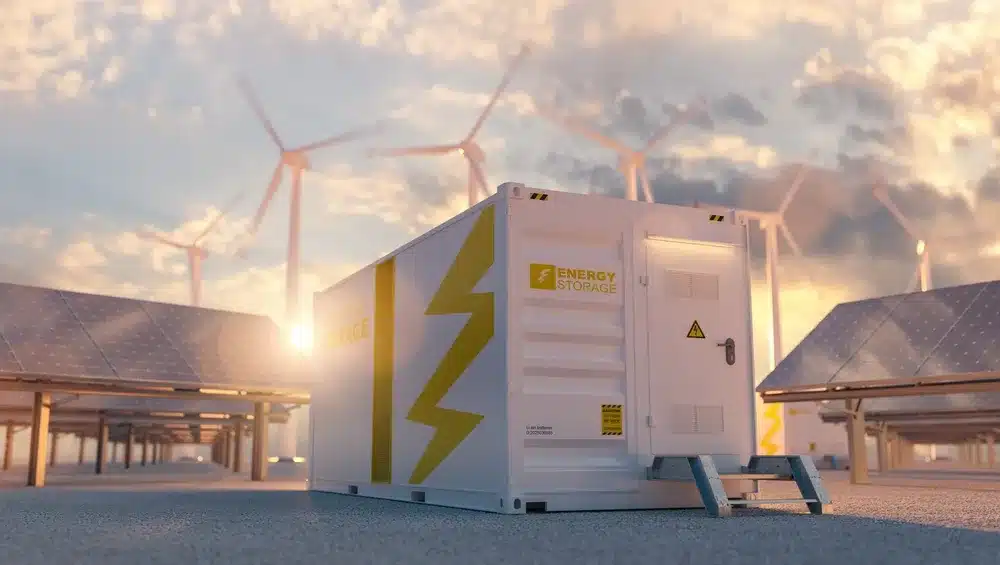
BESS is often described as the “missing link” in renewable energy systems. Solar and wind generation are inherently intermittent: solar output falls at night, and wind generation fluctuates unpredictably. Without storage, these sources cannot fully replace dispatchable power such as coal, gas, or hydro.
The IEA emphasizes that storage is essential for grid flexibility, helping to balance supply and demand in real time. In practical terms, BESS supports short-term balancing of renewable output, provides ancillary services that maintain grid stability, such as frequency and voltage control, shifts energy to periods of higher demand, and enhances system resilience by restoring operations following outages.
Batteries are taking on an expanding role across the modern economy, underpinning everything from electric mobility to power system stability and the resilience of digital infrastructure, including data centers and AI-driven technologies.
Their relevance extends well beyond energy. BESS now supports a wide spectrum of industrial and strategic uses, ranging from consumer electronics to defense applications and next-generation innovations such as robotics. With costs continuing to ease and adoption widening, they are steadily emerging as a core enabler of economic and technological systems.
Investment trends reflect this importance. Global spending on battery storage reached around $66 billion in 2025, as part of broader clean energy investment flows.
However, even the IEA cautions that batteries are not a complete solution. While they are highly effective for short-term flexibility and energy shifting, most lithium-ion systems today provide only around two to four hours of storage and are less suited to addressing longer-term or seasonal imbalances. This limitation becomes increasingly significant as renewable penetration rises.
According to the IEA, pumped storage hydropower remains a significant form of grid-scale storage and is particularly valuable for bulk energy shifting over extended periods due to its ability to store large amounts of energy at relatively low cost compared to batteries.
Supply Chain Risks in BESS
Another challenge is that BESS deployment is highly concentrated in a few major economies, reflecting disparities in capital access, industrial capacity, and policy support.
Currently, China dominates the global supply chain for rare earths, which are needed in renewable technologies, contributing roughly 60% of total mined output while controlling over 90% of their refining capacity.
As batteries take on a more central role in both energy systems and the broader economy, vulnerabilities in global supply chains are becoming increasingly evident. Lithium-ion cell production remains highly concentrated in East Asia, led by Chinese, Korean, and Japanese manufacturers that together account for nearly all global output. China alone dominates the market, producing well over 80% of batteries in 2025. The EU and the US make up most of the remainder, contributing relatively comparable shares.
However, BloombergNEF (BNEF) reports that China’s battery sector is facing significant overcapacity, as rapid expansion in manufacturing has outpaced demand from EV and BESS, leading to weaker demand conditions and intense price competition. This imbalance has contributed to falling prices, margin pressure, and growing consolidation risks among producers, particularly smaller firms.
According to Dianne Araral, an independent green finance and energy policy analyst in Singapore, and Eduardo Araral, Professor of Public Policy at the Lee Kuan Yew School of Public Policy, the main constraint in renewable energy supply chains, including for battery energy storage systems (BESS), lies not in raw mineral availability but in processing capacity.
They note that concentration is even more pronounced midstream, where the top three countries’ share of mineral processing has increased from about 82% in 2020 to 86% in 2024. This dominance is largely driven by Indonesia in nickel and China in cobalt, graphite, and rare earth elements.
“The strategic bottleneck is not in the extraction itself, but in the later stages of production: refining centers, chemical plants, rare earth element separation facilities, and export control regimes,” they wrote. “When tensions rise in lithium, cobalt, nickel, graphite or rare earth element supplier countries – or when major powers restrict exports of certain commodities – the consequences affect a wide range of industries, including batteries, electric vehicles (EVs), wind turbines and grid infrastructure.”
(Also read: Central Luzon Leads As Renewables Power PH Investment Surge Amid Energy Crisis)
Philippine BESS Landscape
The Philippines is rapidly expanding its renewable energy pipeline, but BESS is still lagging behind planned intermittent capacity. Under the Department of Energy’s (DOE) Green Energy Auction 4 (GEA-4), over 9,000 megawatts (MW) of solar and wind projects are targeted, including hybrid systems designed with storage to enhance grid reliability. Of this, around 1,100 MW of solar capacity is already paired with integrated BESS, reflecting a gradual shift toward combined renewable-storage developments rather than standalone generation.
Still, the system remains skewed toward variable renewable energy, with storage still lagging in scale. DOE data shows more than 20 BESS-related projects in the pipeline, but these account for only a small share of planned renewable additions, with many still at the system impact study stage rather than financial close or construction. While proposed BESS-linked capacity exceeds 3 GW, operational capacity remains far lower due to long lead times in financing, permitting, and grid connection.
This mismatch raises an important structural issue: BESS deployment is not yet scaling at the same speed as intermittent renewable capacity. Storage systems face longer development timelines, higher upfront capital requirements, and dependence on imported battery technologies. As a result, storage risks are becoming a constraint in the transition, particularly in an archipelagic grid where balancing supply across regions is already complex.
Compounding this challenge is the Philippines’ exposure to global competition for critical minerals and battery supply chains. This leaves emerging markets heavily reliant on external supply chains for both cells and upstream materials, limiting their ability to rapidly scale domestic BESS deployment even when policy support is strong.
In this environment, an aggressive renewable energy build-out alone is unlikely to guarantee energy affordability or security. While renewables reduce exposure to imported fossil fuels, they introduce new dependencies on imported technologies and materials. Without commensurate investment in storage, grid flexibility, and diversified supply chains, the system risks shifting from oil dependence to material and technology dependence, rather than achieving true energy resilience.
Balancing the Transition
The global energy transition is often framed as a linear shift from fossil fuels to renewables. In reality, it is far more complex.
Battery storage has made remarkable strides and is now a cornerstone of modern energy systems. But technical limitations, supply chain constraints, and uneven deployment all point to a more gradual and multifaceted transition. IEA analysis indicates that battery deployment may need to increase sixfold beyond current levels to fully support renewable-heavy systems.
For countries like the Philippines, the challenge is particularly acute. Renewable energy offers clear benefits, but without sufficient storage and system support, it cannot fully deliver on its promise.
A more realistic pathway may lie in integration rather than replacement, where renewables, storage, and conventional energy sources coexist and evolve together.
In this context, the question is not whether batteries are advancing, but whether they are advancing fast enough, and in the right way, to support the scale and complexity of the global energy transition.
For now, the answer remains: not quite.
Sources:
https://www.iea.org/reports/batteries-and-secure-energy-transitions/executive-summary
https://www.iea.org/reports/world-energy-outlook-2025/executive-summary
https://www.zpnenergy.com/why-energy-storage-is-the-missing-link-in-achieving-100-renewable-energy
https://www.iea.org/energy-system/electricity/grid-scale-storage
https://www.iea.org/reports/world-energy-investment-2025/executive-summary
https://www.iea.org/reports/electricity-2026/flexibility
https://context.ph/2025/06/30/doe-clears-battery-storage-projects-for-grid-impact-study