
 0 Comments
Table of Contents
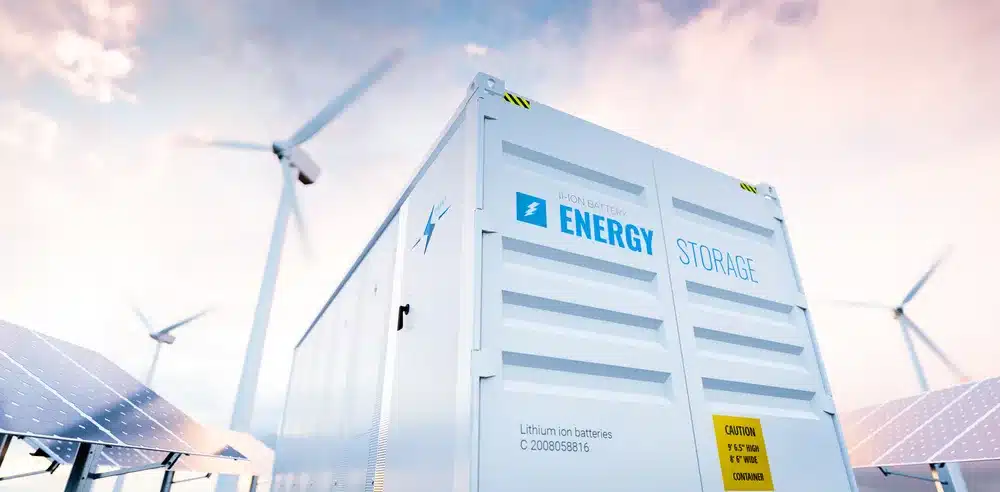
The Energy Regulatory Commission (ERC) has approved SN Aboitiz Power-Benguet Inc.’s (SNAP-BI) plan to build transmission facilities that will connect its 40-megawatt (MW) Binga Battery Energy Storage System (BESS) to the Luzon grid. The project is seen as a crucial addition to the region’s strained reserves as the country increases its reliance on renewable energy (RE) sources.
In a 22-page decision dated November 6, 2025, the ERC allowed SNAP-BI to construct what it identified as the 193.45-million First Facility. This involves a 50-megavolt-ampere (MVA) take-off substation and an approximately one-kilometer, 69-kilovolt (kV) transmission line that will link the battery system to the National Grid Corp. of the Philippines’ Binga Substation in Itogon, Benguet.
The regulator did not authorize the company to build the Second Facility, which is located inside NGCP’s switchyard. The ERC ruled that the grid operator must construct and operate all facilities within its switchyard to ensure system integrity and long-term grid reliability. Even the approved portions of the project will ultimately have to be operated by NGCP, with SNAP-BI paying the appropriate charges for their use.
(Also read: UK’s Net Zero Rush Fuels Economic Strain & Energy Woes)
Boosting Luzon’s supply
The decision comes at a time when Luzon’s reserve levels remain far below required thresholds. The latest figures show a contracted regulating reserve of 347.78 MW, compared to the ideal requirement of 591 MW. Contingency reserve sits at 466.7 MW against a target of 668 MW. Additional flexibility tools such as battery storage are becoming increasingly urgent as more variable RE sources enter the grid.
Once operational, the Binga BESS will provide support during tight supply periods and absorb excess energy when renewable output spikes. These services are considered essential to maintaining frequency stability as the grid transitions to more weather-dependent power sources.
Construction of the project began on March 1, 2025, several months before regulatory approval was issued. The ERC granted regulatory forbearance in this case but stressed that securing prior approval remains a mandatory requirement for all future projects. SNAP-BI is also required to settle a permit fee of P1.45 million.
The commission further stipulated that if the dedicated transmission facilities serve other customers or functions in the future, ownership must be transferred to NGCP at fair market value. The permit fee is excluded from any reimbursable costs since it forms part of regulatory compliance.
The ERC also directed NGCP to speed up upgrades to the Ambuklao to Binga and Binga to San Manuel 230-kV transmission lines. These improvements are expected to be completed by the end of this year. Any delay on NGCP’s part will limit the Binga BESS to charging no more than 20 MW, a restriction that would significantly reduce the facility’s intended contribution to reserve adequacy.
(Also read: Rushing Offshore Wind Could Spike Power Bills for Filipino Households)
SNAP’s push for a stronger renewable mix
The Binga BESS is a key component of SN Aboitiz Power’s (SNAP) strategy to combine hydropower assets with battery storage in order to build a more flexible and reliable power portfolio. SNAP is a partnership between the Aboitiz Power Corp. and Norway-based Scatec.
The battery installation will rise beside the 140-MW Binga Hydroelectric Power Plant in Itogon, a long-standing power facility that has undergone extensive rehabilitation and capacity upgrades since SNAP took over operations in 2007.
In a statement, SNAP President and Chief Executive Officer Joseph Yu said the company views the project as a major step in its contribution to the Philippines’ energy transition. He noted that the facility is the company’s first battery project in Benguet and the first to reach financial close and begin construction in the Cordillera Administrative Region.
SNAP selected GEDI China Energy as the engineering, procurement, and construction contractor after finalizing its EPC agreement last February. The company currently operates the 24-MW Magat BESS and is developing a separate 16-MW expansion at the same site. Once the Binga facility and Magat Phase 2 are completed, SNAP expects to have at least 80 MW of battery storage capacity online by 2026.
The Binga BESS is targeted for commercial operation by October 2026. It will use lithium-ion technology to help stabilize grid frequency, manage fluctuations from variable generators, and support ancillary services that are vital to grid reliability.Shares of Aboitiz Power Corp. gained P.50 centavos and closed at P40 each after the announcement of the ERC decision. This development is a positive signal for the company’s growing RE portfolio and its shift toward a more diversified mix of power technologies.
Sources:
https://powerphilippines.com/erc-approves-sn-aboitiz-power-benguets-40-mw-battery-grid-link