
 0 Comments
Table of Contents
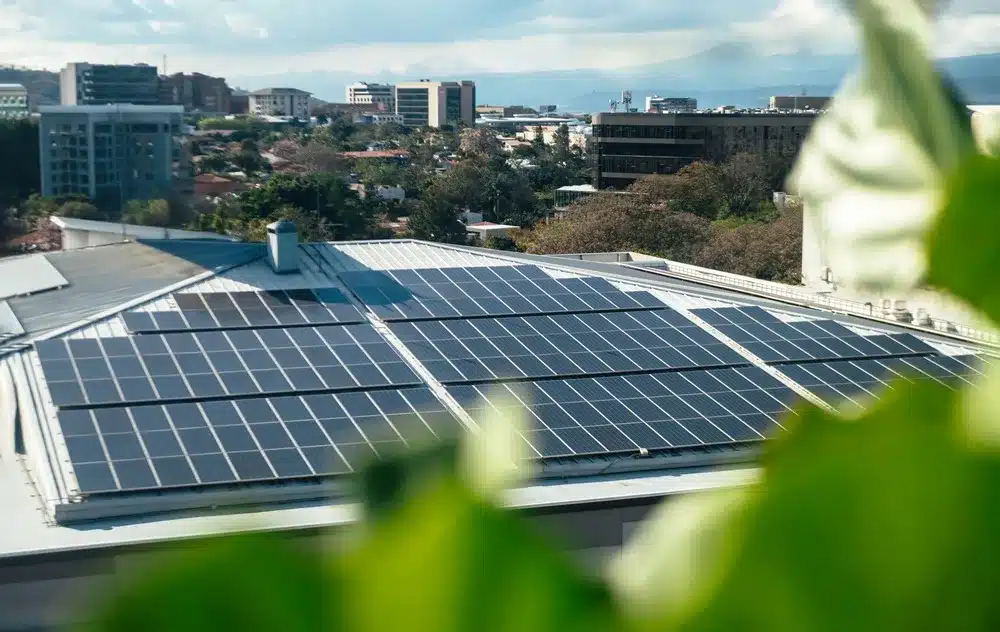
Rooftop solar adoption in the Philippines appears to have accelerated sharply over the past year. The Institute for Climate and Sustainable Cities (ICSC) estimated that the country had 712 megawatts (MW) of installed rooftop solar capacity as of January 2025, based on satellite imagery.
More recent analysis suggests that the figure has grown substantially. According to preliminary estimates by energy think tank Ember, around 600 MW of rooftop solar capacity was added between April 2025 and April 2026. The organization pointed to lower grid-supplied electricity during midday hours, when solar output is typically highest, as evidence of the rapid expansion.
If these estimates hold, the Philippines now has roughly 1,300 MW of installed rooftop solar capacity, nearly double the level recorded at the start of 2025. Despite this growth, rooftop solar remains largely untapped. ICSC estimates that the country’s building rooftops could theoretically support up to 106,000 MW of solar capacity, meaning only about 1% of the available potential has been developed so far.
“The government’s plans to speed up renewables auctions will help avoid a future energy emergency,” stated Ember. “Rooftop solar can help to do that even faster.”
A Solution to the Energy Emergency?
In March 2026, President Ferdinand Marcos Jr. declared a national energy emergency amid concerns that escalating tensions in the Middle East could disrupt global fuel supplies. The government moved to strengthen energy security and prepared coordinated measures to manage potential supply shortages and price spikes.
Ember argued that accelerating rooftop solar deployment through supportive policies could help the Philippines address its energy emergency more quickly and efficiently.
“Rooftop solar has two key advantages over wind and utility solar: it is built in days, not years, and with batteries, it reinforces the grid rather than stretching it,” it stated.
However, the recent power alerts affecting Luzon and Visayas show that the grid is being challenged by the rapid growth of variable renewable energy (RE), especially solar. Energy Regulatory Commission (ERC) Chairperson Francis Saturnino Juan noted that while solar power helps bolster the grid during daylight hours, with output typically peaking around 2 p.m., generation begins to taper off by late afternoon as sunlight weakens. This decline coincides with rising evening electricity demand, creating supply challenges that can strain grid reliability.
Juan added that the red alerts, which lasted from late afternoon through midnight, highlight limited system flexibility. While the grid could absorb peak solar output during the day, it struggled to compensate when that generation declined in the evening. “We are not simply facing an afternoon and early evening shortage; we are facing a flexibility shortage in the hours after the sun goes down,” he explained.
Meanwhile, PhilStar columnist Boo Chanco flagged concerns over the rapid rise in rooftop solar capacity, warning that large-scale distributed generation could strain grid operations. Fast-growing household solar adoption may create supply-demand imbalances, including reverse power flows and voltage instability in systems originally designed for one-way electricity delivery.
“Getting a zero billing from Meralco, through net metering, makes one feel victorious. But the cost of building and maintaining the grid, to which the zero-billing household is still connected as backup, would then fall on those who cannot afford to buy a rooftop solar installation,” he warned. “This has the unintended consequence of making rooftop solar an anti-poor alternative.”
(Also read: Who Is Responsible for the Red and Yellow Alerts in the Luzon and Visayas Power Grids?)
Philippines Now a Major Hub for Chinese Solar Imports
According to Ember, the Philippines has emerged as China’s second-largest solar panel export market in 2026. It has now surpassed Pakistan and ranks just behind the Netherlands, a key European import hub.
Solar imports are overwhelmingly sourced from China, which supplied about 98% of shipments in 2025. Export volumes surged to record levels in March and April 2026, suggesting more than 3,000 MW of solar panels could be headed to the Philippines.
This scenario is similar to what happened in Africa, wherein solar adoption accelerated rapidly alongside a surge in Chinese panel imports. According to Ember, shipments to the continent rose 60% between July 2024 and June 2025, reaching about 15 GW of capacity.
However, much of this growth was driven by distributed, small-scale systems rather than utility-scale projects, with panels increasingly used to power homes and rural communities. South Africa remained the largest importer during the period, while Nigeria and Algeria also recorded strong gains in household solar deployment.
Additionally, many of the low-cost solar panels that entered African markets were of lower quality and had shorter lifespans, leading to frequent replacements and higher import demand. Their lifecycle also carries hidden environmental costs, from pollution linked to raw material extraction to growing volumes of discarded panels. With limited recycling capacity, the region risks replacing fossil fuel dependence with a new form of environmental pressure.
Despite Africa’s solar boom, small-scale panels and diesel generators remain stopgap solutions that fall short of supporting long-term industrial growth. As economies expand, factories and heavy industries require stable, large-scale power that intermittent solar and backup fuels cannot reliably provide.
In response, some investors, including foreign firms, are building captive power systems to bypass unstable grids. However, this fragmented approach may deepen inequality between users with private generation and those still dependent on public electricity supply.
The Early Stage of Domestic Production in the PH
Ember is optimistic about local solar panel production, noting early signs of a domestic manufacturing base emerging in the Philippines. New facilities are being established within the Philippine Economic Zone Authority (PEZA) areas, signaling growing industrial interest in the sector.
Key investments include Gstar’s 1 GW plant in Subic Bay, which began operations in May 2025, followed by another 1 GW facility launched in April 2026 at the First Philippines Industrial Park. In addition, a 0.37 GW project in Batangas was signed in April 2026, further expanding the country’s nascent solar manufacturing capacity.
But even with local manufacturing, the problem lies in sourcing key raw materials needed for renewable technologies, including lithium, cobalt, nickel, and rare earth elements. Demand for these minerals is rising quickly as the RE transition accelerates, with lithium demand alone jumping nearly 30% in 2024, while demand for nickel, cobalt, graphite, and rare earths increased by about 6% to 8%.
At the same time, supply chains remain highly concentrated, with a small group of countries controlling most extraction and processing, creating new geopolitical bottlenecks in energy transition metals.
This concentration also brings environmental pressure, including expanded mining activity in countries like the Philippines, where rising nickel production linked to battery demand has raised concerns over ecological damage and impacts on local communities.
Perhaps the most significant risk is intensifying geopolitical competition, as advanced economies move to secure critical minerals, expand domestic production, and reshape supply chains through industrial policy. This shift could leave developing countries like the Philippines at a disadvantage, limiting their access to financing, technology, and integrated supply networks.
(Also read: The Real Reasons Behind Filipinos’ Electricity Bill Shock)
The Fragile Promise of Solar Energy
While solar generation helps diversify supply, its inherent variability—driven by daily cycles, weather conditions, and geography—can strain grid stability when deployed at scale. Studies of high solar integration in other markets have shown lower capacity factors for conventional plants and higher balancing costs, as backup systems are forced to ramp more frequently.
The National Grid Corporation of the Philippines (NGCP) has also warned that heavy reliance on intermittent sources can introduce frequency and voltage fluctuations, which, if unmanaged, may trigger protective mechanisms such as load shedding or rotating power interruptions. Recent voltage disturbances in parts of North Luzon have further highlighted how rapid shifts in renewable output can affect system stability in real time.
Energy affordability is also a concern raised by Pangasinan 2nd District Rep. Mark Cojuangco, warning that heavy reliance on intermittent energy sources without sufficient baseload capacity could push electricity costs higher and weaken energy security. He noted that solar plants typically operate at only about 15% effective capacity, and current battery storage remains inadequate to meet peak evening demand.
“This is an example of marketing,” he declared. “The public is being misled about the capability of wind and solar.”
Sources:
https://www.pna.gov.ph/articles/1271702
ERC Chairman Francis Saturnino Juan, speech at the Economic Journalists Association of the Philippines (EJAP) Energy Forum 2026, Manila, Philippines, May 26, 2026.
https://www.philstar.com/business/2026/05/18/2528626/rooftop-solar
https://www.philippinetimes.com/news/278628913/is-africa-becoming-a-solar-panel-graveyard
https://www.mdpi.com/1996-1073/18/1/130
https://www.philstar.com/headlines/2026/01/08/2499519/ngcp-welcomes-terra-solar-project-but