
 0 Comments
Table of Contents
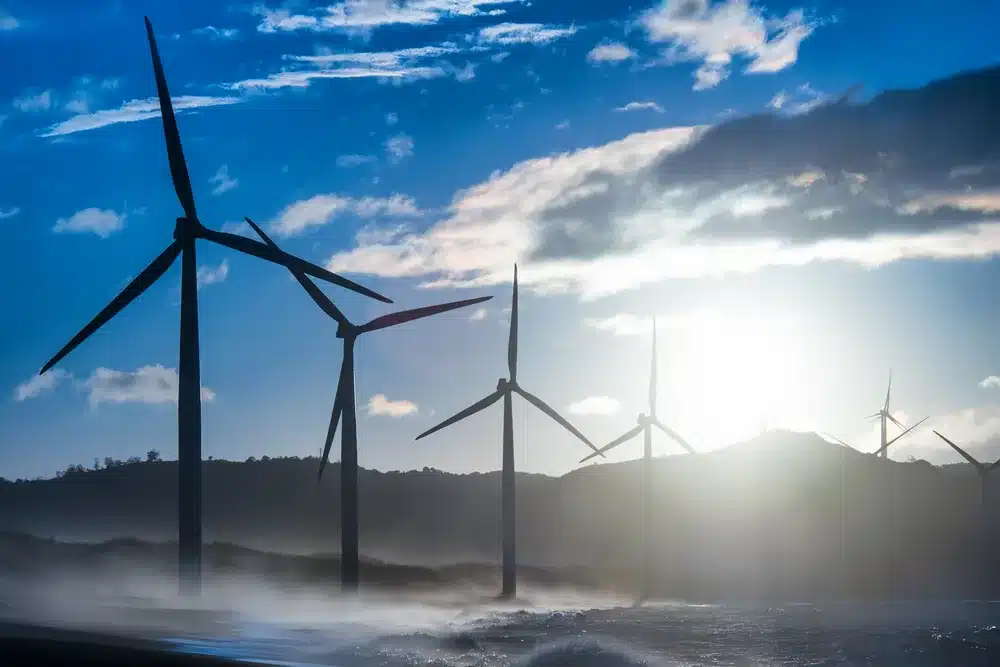
Northern Luzon could gain another major source of renewable energy by 2031 as a proposed ₱8.44-billion wind farm in Bangui, Ilocos Norte moves through the environmental review process, adding more clean power to the Luzon grid amid rising electricity demand.
The project is being proposed by Luzon Cleanergy Generation Inc. (LCGI), a wholly owned subsidiary of Aboitiz Renewables Inc., through the development of the 132.8-megawatt Bangui 2 Wind Power Project.
Documents submitted to the Department of Environment and Natural Resources (DENR) show the company is seeking the necessary environmental clearances for the estimated P8.44-billion development, with construction targeted to begin in 2029 and commercial operations expected by the second quarter of 2031.
Environmental Review
The proposed project is currently undergoing the environmental impact assessment process, with a public scoping session scheduled on July 22. The activity will provide host communities and stakeholders with an overview of the project while gathering feedback and addressing concerns before the development moves to the next stage of regulatory review.
LCGI said the wind farm is designed to help strengthen the country’s electricity supply while supporting long-term energy security.
“The proposed wind power plant will help augment the demand for reliable and affordable power supply,” the company said in its filing with the DENR.
It added that the project “will not only supply enough electricity to Filipino households and businesses but will also contribute to national development.”
Large-Scale Renewable Investment
The wind farm will be developed within a 3,321-hectare renewable energy service contract area spanning eight municipalities in Ilocos Norte. However, only about 656.96 hectares will be utilized for the project.
The development will deploy 17 wind turbine generators, each with a rated capacity of 8 MW, bringing total installed capacity to 132.8 MW. Separate project documents also describe the facility as having an estimated capacity of 136 MW.
The estimated ₱8.4-billion investment will cover preliminary studies, permitting and licensing, site preparation, environmental mitigation measures, and the construction of the project’s main power generation facilities and supporting infrastructure.
Since portions of the proposed site are located on public forest land, LCGI is also expected to secure a Sustainable Forest Land Management Agreement from the DENR as part of the project’s permitting requirements.
Construction is targeted to begin in the second quarter of 2029, with some project timelines indicating an April 2029 groundbreaking. Commercial operations are scheduled to commence in the second quarter of 2031.
Energy Transition Goals
The Bangui project forms part of AboitizPower’s renewable energy expansion as the Philippines works toward increasing the share of renewable energy in the national generation mix to 35 percent by 2030 and 50 percent by 2040.
The government’s long-term energy outlook also points to sustained growth in electricity demand. Under the Philippine Energy Plan, total electricity sales are projected to rise to 408.11 terawatt-hours by 2050 from 91.3 TWh in 2022, while peak demand is expected to more than triple to 68.5 gigawatts from 16.6 GW over the same period. Luzon is projected to account for roughly 70 percent of the country’s peak electricity demand by 2050.
Aboitiz Renewables is accordingly accelerating investments across multiple clean energy technologies, including solar, wind, hydroelectric, geothermal, and battery energy storage systems.
The company has more than 1,000 MW of renewable energy projects in its development pipeline and is targeting 4,600 MW of clean energy capacity by 2030. It also recently completed a 92.55-megawatt-peak solar power plant in Pangasinan, its third solar facility in the province, which will supply electricity directly to the Luzon grid.
For 2026, AboitizPower has allocated around ₱62 billion in capital expenditures, with the bulk earmarked for renewable energy and battery energy storage projects.
The company remains the country’s largest power producer, holding a 24.3-percent share of the domestic generation market with an aggregate installed capacity of 6,850.63 MW, placing it just below the 25-percent market share ceiling prescribed under Philippine law.
Source:
https://mb.com.ph/2026/07/14/aboitiz-unit-plans-84-billion-wind-power-plant-in-ilocos-norte