
 0 Comments
Table of Contents
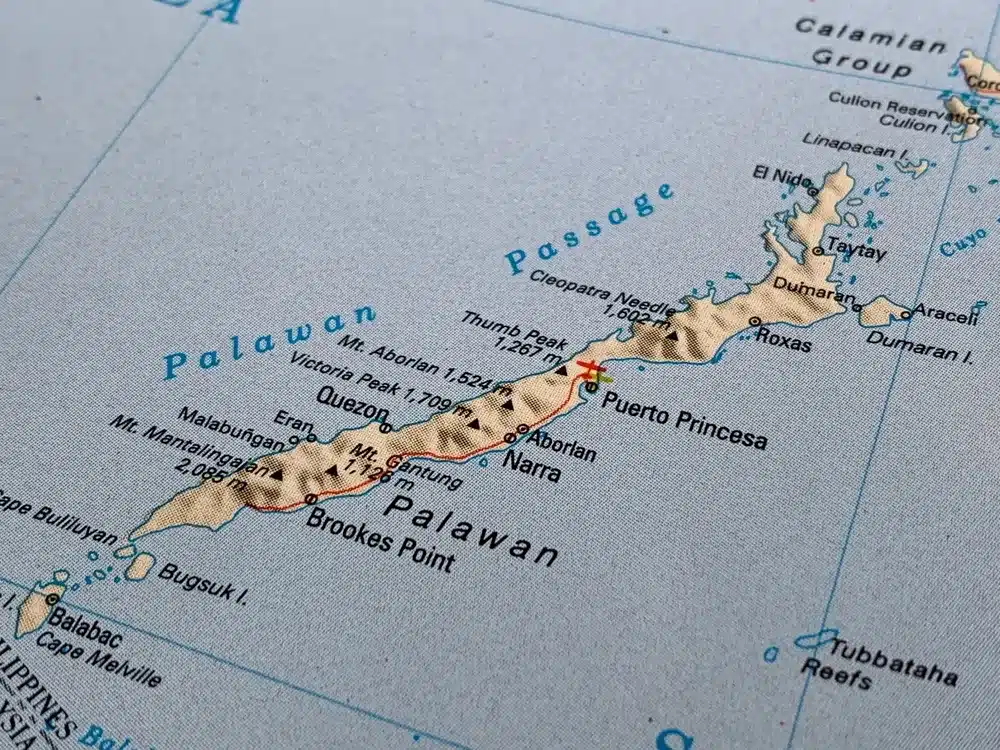
The Philippines is expanding efforts to determine whether naturally occurring hydrogen beneath its territory can become a new indigenous energy resource, with the Department of Energy (DOE) opening a 712,000-hectare offshore area in the East Palawan Basin to possible exploration.
The DOE’s latest invitation for challenge involves an area nominated by US-based energy company Koloma Inc., but the application is part of a national effort to assess the country’s native hydrogen potential rather than proof that commercially viable reserves have already been found.
Under the Philippine Conventional Energy Contracting Program, other qualified companies may submit competing applications for the East Palawan area. The deadline is Oct. 14, when applications will also be opened. Challengers must pay a ₱1-million application fee on or before the deadline.
The development adds another potential frontier to the country’s emerging native hydrogen exploration sector, as the government looks for indigenous energy sources that could reduce dependence on imported fuels and diversify the power mix.
Still Under Testing
Native hydrogen, also called natural or geologic hydrogen, is naturally formed beneath the Earth’s surface through geological reactions. Unlike hydrogen manufactured through industrial processes, it does not have to be produced from another feedstock through an industrial conversion process.
Its potential significance for the Philippines lies in the possibility of finding an energy resource within the country’s own geological formations.
The country remains exposed to international fuel markets. Government data cited by the DOE showed that as much as 98% of crude oil imports had historically come from the Middle East.
The electricity sector also continues to rely heavily on conventional generation. Energy Secretary Sharon Garin said coal accounts for around 60% of the country’s power mix, while renewable energy sources make up roughly 25%.
The government has been pursuing native hydrogen exploration alongside its wider efforts to develop indigenous energy sources and diversify the country’s energy supply.
Early-Stage Exploration
The Philippines currently has three native hydrogen service contracts, all held by Koloma, covering portions of Central Luzon and Zambales.
Koloma secured Service Contracts 83 and 84 in Central Luzon in 2025 and received Service Contract 92 in July for an exploration area in western Zambales. The company has also started a two-dimensional seismic survey in Pangasinan to map underground formations that may contain hydrogen.
The DOE expects drilling under the company’s existing exploration program to begin later this year or in early 2027.
The government has cited geological studies that identified Central Luzon as “among the world’s most promising areas for naturally occurring hydrogen.” Initial geological sampling in Pangasinan also produced findings that warranted further studies.
The exploration, however, remains at an early stage. Geological surveys can identify formations that may be prospective, while drilling is needed to determine whether hydrogen is actually present in recoverable concentrations.
Even if deposits are confirmed, further work would be required to establish whether they can be produced safely, reliably, and economically at commercial scale.
Potential For Further Exploration
The East Palawan application therefore represents another step in determining how extensive the Philippines’ native hydrogen potential could be.
If Koloma secures the area, it would give the company a fourth service contract and extend exploration into an offshore basin. The competitive challenge process allows the government to gauge interest from other qualified companies in exploring the resource.
The significance of the program will ultimately depend on what exploration and drilling reveal. A commercially viable native hydrogen resource could provide another domestic energy option, potentially supporting energy security and the country’s longer-term transition toward a more diversified power mix.
The coming rounds of seismic surveys, geological studies, and drilling will determine whether native hydrogen can move from an emerging exploration prospect to a practical component of the Philippine energy landscape.
Source:
https://business.inquirer.net/610794/us-firm-eyes-wider-search-for-native-hydrogen/amp