
 0 Comments
Table of Contents
August’s relentless Habagat rains put the Philippines through weeks of flooding, evacuations and disrupted services as the southwest monsoon was repeatedly strengthened by passing tropical systems. PAGASA warned of prolonged rains across large parts of Luzon and the Visayas, while some areas experienced extraordinary rainfall. In Quezon City, more than 200 millimeters fell in just six hours on August 17.
Thousands were forced from their homes, including over 2,800 residents in Zambales, as floodwaters spread through low-lying and coastal communities.
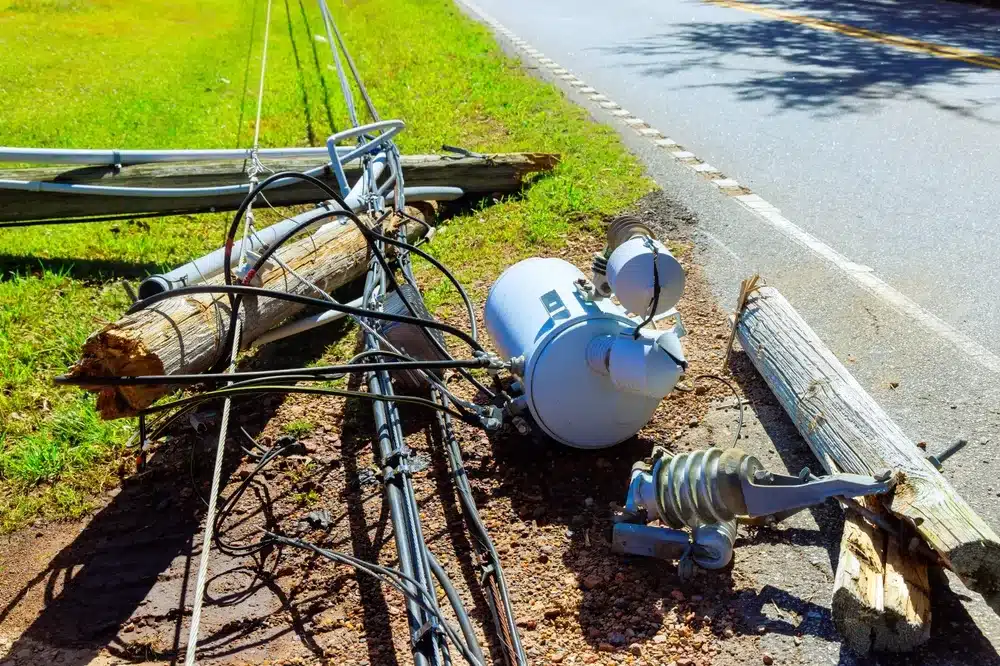
But for communities hit by the rains, the disruption did not necessarily end when the rain stopped. Power outages added to the damage, and distribution utilities faced the task of restoring electricity while roads remained flooded and conditions remained hazardous.
(Also read: ACEN Eyes Renewable Energy Role In Powering Planned Pax Silica AI Hub)
The Toll on Electric Cooperatives
On August 13, the National Electrification Administration (NEA) reported that about 180,000 households had experienced power outages due to the severe weather, with around 7,000 households still without electricity. Those still awaiting restoration were being served by the Benguet Electric Cooperative, Inc. (BENECO) and the Oriental Mindoro Electric Cooperative, Inc. (ORMECO).
Other affected consumers were under the service areas of the Zambales II Electric Cooperative (ZAMELCO II), Batangas 1 Electric Cooperative, Inc. (BATALEC I), Pampanga II Electric Cooperative, Inc. (PELCO II) and Batangas II Electric Cooperative, Inc. (BATELEC II).
Yet despite assurances that power would be restored swiftly, as of August 19, at least 26 ECs across 14 provinces in five regions remained under monitoring as of August 19 due to the heavy rains brought by the southwest monsoon, or Habagat.
BATELEC II, BENECO, and PELCO II were still experiencing partial power interruptions. While electricity had been restored in all 243 affected municipalities, efforts continued to reconnect the remaining 1,002 consumer connections still without power.
BENECO consumers in particular pointed out that outages have become a recurring concern even when there is no extreme weather to blame. Residents acknowledged the difficult and often hazardous work of crews restoring damaged lines, but said the bigger issue lies in strengthening the system itself. They urged BENECO’s management and engineers to prioritize lasting investments in the network instead of repeatedly addressing outages through temporary repairs.
Meralco’s Response
Heavy rains and flooding also disrupted electricity service for about 98,000 customers of Meralco, equivalent to roughly 1% of its total customer base. The utility attributed the outages largely to rising floodwaters and damage to electrical infrastructure.
Most of the affected customers were in Cavite, with additional disruptions reported in Laguna, Bulacan, Batangas, Rizal, Quezon and Metro Manila.
By August 18, Meralco had restored electricity to nearly all customers affected by the Habagat, bringing the number of remaining outages down to about 2,000 from 10,000 recorded a day earlier. Flooding accounted for most of the lingering disruptions, particularly in Cavite and Quezon.
Meralco said its crews and field personnel were working extended hours to safely complete restoration. By August 20, the utility had fully restored power to all customers.
ECs: Beyond the Funding Problem
ECs are backed by substantial public support, with taxpayers helping fund programs intended to strengthen their ability to withstand and recover from disasters. In April, NEA Administrator Antonio Mariano Almeda highlighted several initiatives aimed at helping ECs address climate-related risks.
Among these is the Electric Cooperatives Emergency and Resiliency Fund (ECERF), which provides grants for the immediate restoration or rehabilitation of infrastructure damaged by disasters and other force majeure events. The NEA also operates a Regional Procurement Hub (RPH) Program to support disaster response, while its Enhanced Lending Program helps ECs finance renewable energy projects.
The ECERF receives an annual allocation of approximately ₱200 million, according to Senator Sherwin Gatchalian. In October 2024, Gatchalian called on the NEA to strictly enforce resilience standards for ECs, including requirements under the ECERF law for risk assessments and emergency response plans during natural disasters such as typhoons.
“Given that the Philippines is among the countries most vulnerable to climate change risks and natural disasters, ECs need to develop their resilience to prevent power interruption or at least shorten the period of such incidents during and after calamities,” he stressed.
Yet the question of preparedness remains, as recovery in some EC-served areas continues to lag after calamities. In November 2025, the Cebu Electricity Rights Advocates (CERA) called for more equitable improvements to Cebu’s power infrastructure, highlighting the stark disparity between Metro Cebu and other parts of the province.
CERA cited the contrasting recovery experiences following recent disasters. It praised the Visayan Electric Company (VECO) for quickly restoring power and, consequently, water services in Metro Cebu, attributing the response to coordinated field operations and timely communication with consumers.
But in areas served by Cebu Electric Cooperatives (CEBECos), restoration was slower and uneven, leaving thousands of households without water for days as power disruptions persisted.
“There is an alarming pattern between the speed of recovery in Cebu City and the hardship being endured in Cebu Province,” stated CERA convenor Nathaniel Chua. “We recognize that those in highly urbanized areas will be severely hampered if they are left without adequate water supply and power, but it does not mean that we should reduce the importance of our neighboring municipalities and other areas in the province. Immediate and responsive help should be given to those who actually need it.”
CERA called for immediate reforms among ECs, urging them to provide consumers with clear, timely and consistent updates on restoration efforts.
Meanwhile, Benguet residents lamented that unpredictable outages are disrupting businesses, remote work and daily routines. Consumers want clearer data on outage causes, maintenance and infrastructure spending, as well as progress on system upgrades. Some also called on local officials to help elevate concerns to national regulators, while acknowledging that mountainous terrain, vegetation, equipment failures and extreme weather can complicate operations and cause unavoidable disruptions.
(Also read: CREC Launches First Embedded Solar Project With Battery Storage In Pampanga)
Making the PH’s Power Resilient
The economic cost of unreliable electricity in the Philippines is substantial. The World Bank estimates that power disruptions cost the economy about $8 billion a year in lost productivity, while a nationwide outage lasting just five hours could result in approximately ₱556 million in losses.
The real cost, however, is measured in more than pesos. For businesses, prolonged outages mean lost operating hours, spoiled goods, disrupted communications and income that may never be recovered. For households, particularly those already living on the margins, every interruption can mean additional expenses, lost wages and fewer opportunities to earn. Repeated disruptions can deepen financial insecurity and push vulnerable families closer to poverty.
The stakes are even higher when electricity powers essential services. Hospitals, water systems, telecommunications and other critical facilities depend on reliable power to function. A prolonged outage can therefore move quickly from an inconvenience to a matter of public health and safety, particularly during extreme heat, flooding or other emergencies.
Filipinos should not have to accept different standards of reliability based on where they live or which distribution utility serves them. Whether customers are in Metro Manila, a provincial city or a remote community served by an EC, they deserve dependable electricity and a restoration response that is swift, transparent and accountable.
Extreme weather may be beyond anyone’s control, but the resilience of the power system is not. As climate risks intensify, building stronger infrastructure, improving preparedness and ensuring faster recovery must become central to how the country delivers electricity. Power resilience is no longer simply about keeping the lights on—it is about protecting livelihoods, public services and lives.
Sources:
https://www.facebook.com/reel/4732027733692403
https://origin.pagasa.dost.gov.ph/weather/weather-outlook-weekly
https://www.pna.gov.ph/articles/1281857
https://tribune.net.ph/2026/08/09/baguio-consumers-decry-power-outages
https://newsinfo.inquirer.net/2003734/nea-emergency-funds-for-electric-coops-near-depletion
https://bworldonline.com/the-nation/2024/10/31/632134/secure-power-in-disasters-nea-told
https://newsinfo.inquirer.net/2174481/power-resilience-is-a-critical-need