
 0 Comments
Table of Contents
According to a new IEA report, the conflict in the Middle East is reshaping global energy investment decisions as governments and businesses place greater emphasis on energy security and resilient trade routes.
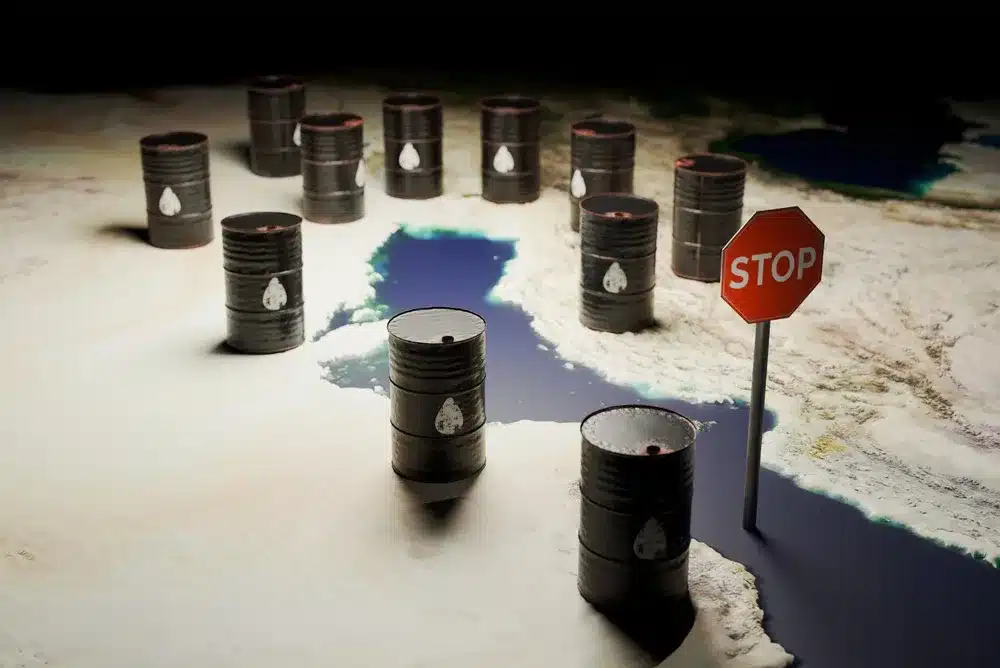
Latest supply shocks are accelerating diversification efforts and reshaping long-term energy investment, especially in Asia and the Middle East, where disruptions in the Strait of Hormuz have been most severe.
Against this backdrop, IEA Executive Director Fatih Birol said the world is facing its largest energy security crisis, echoing the shift seen after the 1970s oil shocks. “We are already seeing intensified efforts by both producer and consumer countries to diversify trade routes and energy sources – such as advancing new pipelines and other supply infrastructure, on the one hand, and turning more to domestically available resources, on the other. These range from renewables and nuclear to coal, oil and gas, in some cases – as well as broader measures to strengthen electricity systems, expand electrification and accelerate energy efficiency,” she noted.
(Also read: GWEC: Strategic Port Upgrades Key to Unlocking Billions in Philippine Offshore Wind Investments)
Coal’s Comeback Amid the Energy Crisis
Roughly a fifth of global LNG shipments normally pass through the Strait of Hormuz, largely bound for Asia. With gas markets under strain and prices still elevated, several countries in Asia and Europe have moved to expand coal-fired generation or reconsider planned coal phase-outs. These include Germany, Italy, Japan, South Korea, Pakistan, Bangladesh, Thailand and the Philippines.
Italy has pushed back its coal phase-out target from 2025 to 2038. According to energy and climate data think tank Ember, about three-quarters of the global impact comes from potential fuel switching from gas to coal in China and the EU.
In the Philippines, coal-fired power output was increased to help stabilize electricity costs due to higher LNG prices. Department of Energy (DOE) Secretary Sharon Garin warned that without intervention, electricity prices would rise by as much as 16%.
The announcements have prompted a surge of coverage from global media and analysts describing a so-called “return to coal.” Some have criticized the trend as incompatible with climate goals, while others have portrayed it more positively, calling it a sign of coal’s resurgence after being written off.
To gauge the potential impact, Ember analyzed coal policy shifts and market responses across 16 countries and the EU’s 27 member states, which together accounted for about 95% of global coal-fired power generation in 2025. It estimated these dynamics could raise coal generation by about 175 terawatt-hours (TWh), or 1.8%, in 2026 compared to the previous year.Electric Power Industry
Growing Investment In Local Energy Sources, Including Fossil Fuels
The IEA said renewables and nuclear energy still make up over 70% of global power generation investment. Still, it noted rising interest among fuel-importing countries in domestically available energy sources, including coal.
Global energy investment is projected to reach $3.4 trillion in 2026, a modest increase from the previous year. Of this, about $2.2 trillion is expected to flow into grids, storage, low-emissions fuels, nuclear, renewables, energy efficiency, and electrification.
Still, a substantial $1.2 trillion will go to oil, natural gas, and coal despite the clean energy shift. This marks a return to 2024 levels, following a nearly 3% decline in 2025.
Global investment in coal, in particular, is projected to climb to $180 billion in 2026, its highest level since 2012, with China accounting for nearly 70% of worldwide coal supply spending. The IEA added that some Asian economies affected by the ongoing crisis may extend the lifespan of existing coal-fired power plants to strengthen energy security.
Oil investment is forecast to fall for a third straight year in 2026, slipping below $500 billion. In contrast, natural gas spending is set to climb to its highest level in a decade, driven by a surge in liquefied natural gas (LNG) export developments, particularly in the United States and Qatar. LNG investment is projected to more than double compared with 2025, as over 230 billion cubic meters (bcm) of projects outside the Persian Gulf move into peak construction.
Electricity continues to dominate global energy investment trends. Spending on power supply and related infrastructure is projected to reach almost $1.6 trillion in 2026, rising to about $2 trillion when end-use electrification is included.
Grid investment is projected to approach $550 billion, up nearly 20% year-on-year, driven by the integration of expanding renewable capacity and the need to reinforce system flexibility and reliability. Meanwhile, battery storage spending is set to exceed $100 billion, reflecting its growing role as an enabling technology for renewable energy deployment and grid balancing.
However, developing economies face the risk of falling behind in energy investment, as financial uncertainty stemming from the Middle East conflict makes it harder to accelerate capital-intensive energy projects.
(Also read: Is the Rapid Rise of Renewable Energy Straining Our Grid?)
Natural Gas Fuels Most of the AI and Data Center Surge
Beyond the energy crisis, surging electricity demand from the rapid growth of data centers and artificial intelligence (AI) is also reshaping energy investment trends in several markets. Orders for new gas-fired power plants hit a 25-year high in 2025, with data center expansion emerging as a key driver.
In 2025, global data centers consumed about 500 TWh of electricity, accounting for roughly 1.5% of total global demand. Meanwhile, electricity demand from data centers grew 17%, far outpacing the 3% rise in overall global power consumption. The expansion was largely driven by AI-focused facilities, whose electricity use surged by about 50% over the year.
What mostly powers this boom is fossil fuels, particularly natural gas, the IEA pointed out. Global orders for gas turbines surged 70% in 2025, reaching their highest level since 2000. Delivery delays have also lengthened significantly, with wait times now stretching to five to six years. The same timeframe applies to grid connections and transmission build-outs in many regions where data centers are being developed.
While the IEA estimates that renewables power purchase agreements will meet about half of data center electricity demand in the coming years, nuclear power is gaining traction in the tech sector. Interest is also growing in small modular reactors, an emerging nuclear technology. The pipeline has expanded significantly, with conditional agreements rising from about 25 gigawatts (GW) last year to 45 GW, reflecting tech firms’ willingness to commit future demand as long as the projects are built.
Fossil Fuels May Still Dominate Global Energy Mix By 2050
While some see the energy crisis and rising demand as driving a renewed reliance on fossil fuels, others argue it underscores a more enduring reality: fossil fuels remain central to modern energy systems.
According to McKinsey & Company’s Global Energy Perspective 2025, fossil fuels could still make up as much as 55% of global energy consumption by 2050, even as governments continue to pursue decarbonization targets.
The study highlighted energy affordability, reliability, and emissions reduction as a “trio of priorities” shaping energy decisions, noting that in many markets, cost and security are increasingly taking precedence over decarbonization goals.
Despite ongoing renewable expansion, the outlook suggested fossil fuel demand may only level off between 2030 and 2035 in slower-transition scenarios. Natural gas is expected to see the strongest growth, partly replacing more carbon-intensive fuels such as coal, which is still projected to remain in use depending on regional energy requirements.
McKinsey identified three possible energy transition pathways: Slow Evolution, Continued Momentum, and Sustainable Transformation. Under these scenarios, global temperatures are projected to rise by 2.7°C, 2.3°C, and 1.9°C, respectively, by 2100. Even in the most ambitious case, all outcomes fall short of the 1.5°C target under the Paris Agreement.
“Global greenhouse gas emissions are still rising, and the journey toward decarbonization remains long,” stated the report.
Given these dynamics, the Philippines may need to continue placing strong emphasis on energy security alongside its renewable energy push. While the shift to cleaner sources remains important, sustaining development priorities such as reliable power supply, improved basic services, employment generation, and broader economic growth will depend on stable and affordable energy.
The Philippines accounts for only about 0.5% of global carbon emissions, yet it is often expected to follow the same decarbonization timelines as more industrialized economies whose historical emissions underpinned decades of development. This gap between responsibility and capacity highlights the challenge of balancing climate ambition with domestic development needs.
Sources:
https://www.iea.org/reports/world-energy-investment-2026/sector-highlights?sector=Supply#abstract
https://powerphilippines.com/fossil-fuels-may-still-power-over-half-of-world-energy-by-2050-mckinsey