
 0 Comments
Table of Contents
The Department of Energy (DOE) has continued to push aggressively for renewable energy (RE) expansion, targeting a 35% share in the country’s power mix by 2030 and 50% by 2040. According to the agency, recent Green Energy Auctions (GEA) have added more than 16 gigawatts (GW) of solar, wind, and integrated RE and storage projects scheduled for delivery between 2026 and 2029.
However, recent power alerts in Luzon and Visayas have raised concerns about system flexibility as renewable capacity, particularly solar, continues to grow. While solar energy supports daytime demand, its output drops sharply in the late afternoon, just as evening consumption rises. This creates a supply gap that puts pressure on grid stability and has contributed to red and yellow alerts.
As Energy Regulatory Commission (ERC) Chairman Francis Saturnino Juan noted, “We are not simply facing an afternoon and early evening shortage, we are facing a flexibility shortage in the hours after the sun goes down.”
The gap between daytime generation and evening demand highlights the challenge of relying heavily on intermittent RE, such as solar and wind. These sources are non-dispatchable because their output depends on weather conditions rather than real-time system demand, meaning they cannot be adjusted on command like coal or gas plants.
As the share of variable renewables increases, the power system requires greater flexibility through transmission expansion, energy storage, and reserve capacity. This variability creates a persistent imbalance between supply and demand, increasing the need for balancing services and backup generation.
Several countries that have rapidly transitioned to and heavily depend on renewable energy have experienced massive negative impacts on grid stability, reliability, and overall system performance.
(Also read: GWEC: Strategic Port Upgrades Key to Unlocking Billions in Philippine Offshore Wind Investments)
Hydrological Drought in Colombia
During the 2015–2016 El Niño event, Colombia’s power system came under extreme pressure as an intense and prolonged drought sharply reduced hydropower availability. The system’s heavy reliance on hydropower, which accounts for around 77% of electricity generation, left it highly exposed when rainfall sharply declined.
The El Niño–Southern Oscillation (ENSO), a natural climate cycle that alternates between warming (El Niño) and cooling (La Niña) of Pacific Ocean waters, typically reshapes global weather patterns. In Colombia, the episode was one of the most severe in decades, cutting rainfall by around 40%. Water levels in major reservoirs fell by as much as 60 to 70%, undermining the country’s primary energy source.
The situation worsened after a fire damaged the Central Guatapé hydroelectric plant, one of the largest in the system. As hydropower output declined, thermal plants were forced to ramp up sharply, eventually supplying more than half of total generation by April 2016.
At the same time, electricity demand rose due to higher temperatures and increased cooling needs. The combined effect of reduced supply and rising demand led to shortages of around 200 megawatts (MW). Spot electricity prices surged from typical levels of US$30 to 50/MWh to more than US$400, placing severe pressure on utilities and consumers.
In response, authorities launched emergency demand reduction measures such as the Apagar paga campaign, which encouraged households to cut consumption and rewarded energy savings. Liquefied natural gas (LNG) imports were also increased, and permitting for thermal projects was accelerated to strengthen system flexibility.
This is significant for the Philippines, which faces severe weather events that already strain its power and agricultural systems.
Forecasts from the Philippine Atmospheric, Geophysical and Astronomical Services Administration (PAGASA) and the National Oceanic and Atmospheric Administration (NOAA) suggest a 79% likelihood of a Super El Niño developing by mid-2026 and potentially persisting into early 2027. These episodes, which occur roughly every 10 to 15 years, are known to intensify dry conditions, disrupt rainfall patterns, and trigger substantial crop and energy losses.
Solar Reliance in Spain and the Iberian Blackout
Spain’s rapid expansion of solar power began in the late 2010s, when falling photovoltaic costs and more competitive market structures made large-scale deployment economically viable. The removal of rigid subsidy schemes in favor of auction-based pricing helped reduce fiscal uncertainty, while private-sector tools such as corporate power purchase agreements opened new financing channels. Together with rising wholesale electricity prices, these shifts created strong investment momentum and accelerated solar buildout across the country.
However, on April 28, 2025, Spain and Portugal were struck by a major blackout that disrupted power across the Iberian Peninsula and affected millions of consumers, with ripple effects felt in southern France. At the time of the incident, solar generation accounted for 59% of the power supply, and the grid was already operating under sensitive conditions. A sudden voltage disturbance spread quickly through the system, triggering cascading disconnections and ultimately a widespread collapse.
A subsequent investigation by the European Network of Transmission System Operators for Electricity (ENTSO-E) highlighted gaps in voltage regulation, insufficient reactive power coordination, and limitations in system design and oversight. In particular, parts of the network still relied on manual voltage control processes, which reduced the speed of response during rapid fluctuations. Monitoring systems also struggled to fully capture reactive power imbalances in real time.
The report further noted that some conventional generators did not provide adequate reactive support during the disturbance, while several solar installations operated under fixed settings that limited their ability to dynamically respond to grid stress. In some cases, protective systems caused solar plants to disconnect when voltage thresholds were breached, unintentionally worsening the instability.
The event underscored a broader structural issue facing modern electricity systems: as inverter-based renewable generation grows, grid behavior becomes less predictable and more dependent on advanced control systems, fast response capabilities, and coordinated operational design.
This highlights that rapid solar expansion in the Philippines must be backed by stronger grid infrastructure, system flexibility, and operational readiness. Former ERC Chair Monalisa Dimalanta said recent Luzon alerts reveal deeper system gaps, requiring transmission upgrades and operational reforms. Likewise, the National Grid Corporation of the Philippines (NGCP) stressed that solar and wind variability requires tighter coordination to manage fluctuations, as seen in a January 2026 North Luzon voltage disturbance linked to renewable output.
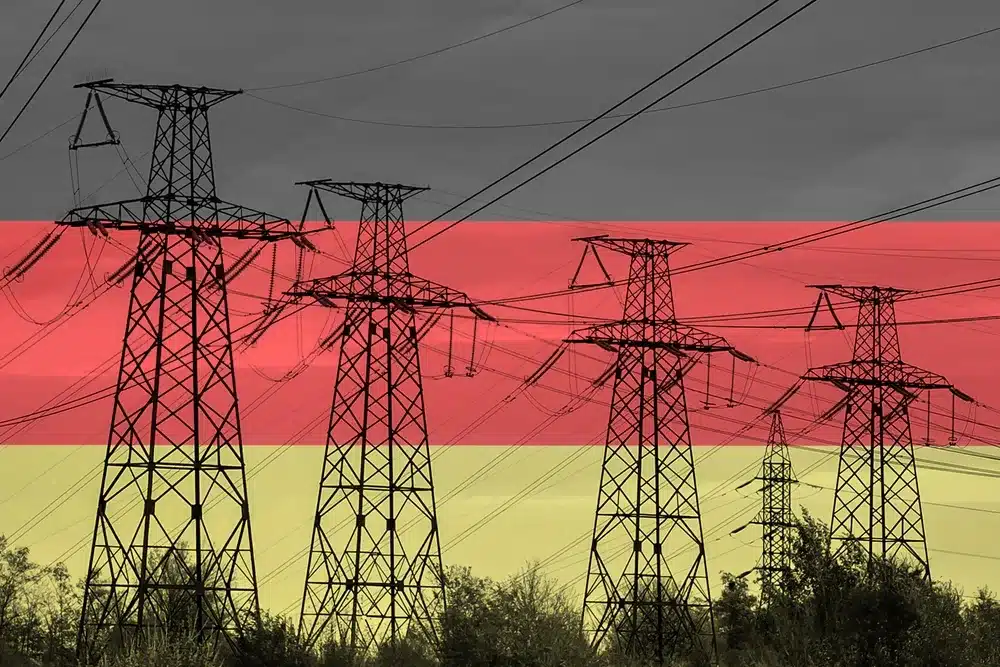
Wind Drought in Germany Drove Higher Fossil Fuel Use
Germany’s power system experienced significant strain in early 2025 as weather-dependent renewable generation weakened across multiple sources. Wind power, which remains the backbone of the country’s renewable mix, fell sharply, dropping by 2.7 percentage points compared with the same period a year earlier.
At the same time, hydropower output also weakened. A relatively warm and dry winter reduced river levels, leading to lower reservoir inflows and a 29% decline in generation.
The shortfall forced a structural shift in the generation mix. Coal-fired electricity generation reached 40 terawatt-hours (TWh) during the January to April period, marking a 16% increase compared with the same months last year and the highest level for this period since 2023. Reports further indicated that fossil-based generation reached its highest level in several years, reflecting a temporary reversal in Germany’s decarbonization progress.
Grid pressure also translated into market volatility. With lower renewable availability and rising reliance on conventional backup generation and imports, electricity prices surged sharply during periods of tight supply. At times, wholesale prices spiked to extreme levels, reflecting heightened uncertainty in the power market and limited short-term flexibility.
As Climate.news writer Lance D. Johnson observed, “Germany’s energy missteps serve as a stark reminder of the need for balanced, pragmatic energy policies. The country’s overzealous pursuit of renewables, combined with the hasty abandonment of nuclear power, has created a perfect storm of economic decline, environmental degradation, and geopolitical tension.”
Such developments offer a cautionary note for the Philippines as it expands wind energy. Wind turbines remain vulnerable to typhoons, to which the country is highly exposed. Moreover, elevated wind power costs under the GEA framework may place upward pressure on electricity prices if not properly mitigated through system planning and risk allocation.
(Also read: Is Rooftop Solar the Answer to the PH’s Energy Challenges?)
Building Energy Systems That Can Absorb Their Own Ambition
Across the cases of Spain, Colombia, Germany, and other emerging energy stress points, a consistent pattern becomes clear: the challenge is not RE itself, but the speed and structure of its integration into power systems that are still adapting. When variable sources expand faster than the supporting infrastructure, the result is often volatility rather than stability.
For countries like the Philippines, which are simultaneously pursuing rapid demand growth and ambitious renewable targets, the lesson is particularly relevant. Expansion plans must move in step with more sophisticated system operations. Otherwise, the gap between policy ambition and system readiness can translate into tighter supply conditions and increased sensitivity to disruptions.
At its core, the global transition is becoming less about the question of whether RE should dominate, and more about how quickly power systems can evolve to support them. This requires not only technological deployment but careful sequencing, institutional readiness, and long-term planning discipline.
As Chito Lozada of the Daily Tribune wrote, “A slow transition is the most logical and pragmatic approach to RE until the technology catches up, which will make it a more reliable source of electricity,” underscoring the argument that pacing matters as much as ambition in energy planning.
Sources:
https://www.pna.gov.ph/index.php/articles/1159659
https://www.facebook.com/media/set/?vanity=ejap.pilipinas&set=a.1297606742543353
DOE Sec. Sharon Garin, keynote address at the Economic Journalists Association of the Philippines (EJAP) Energy Forum 2026, Manila, Philippines, May 26, 2026.
ERC Chairman Francis Saturnino Juan, speech at the Economic Journalists Association of the Philippines (EJAP) Energy Forum 2026, Manila, Philippines, May 26, 2026.
https://newsinfo.inquirer.net/2234585/super-el-nino-could-hit-regions-differently-study-warns
https://www.bworldonline.com/opinion/2026/05/22/751239/all-about-that-grid/
https://www.philstar.com/headlines/2026/01/08/2499519/ngcp-welcomes-terra-solar-project-but
https://lighthief.energy/spain-europes-solar-powerhouse-reborn
https://en.wikipedia.org/wiki/2025_Iberian_Peninsula_blackout
https://www.iea.org/data-and-statistics/data-tools/monthly-electricity-statistics
https://www.climate.news/2025-01-04-germanys-green-energy-dream-turns-into-nightmare.html
https://www.philstar.com/business/2026/02/23/2509707/erc-raises-ceiling-price-offshore-wind-auction